

Technical Support:
158-7527-1139

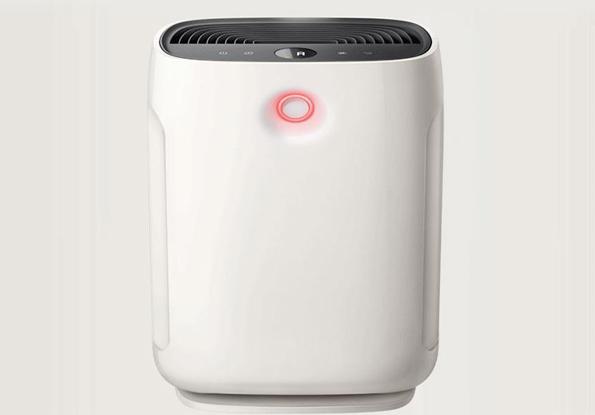
When it comes to air purifiers, from selection to use, there are many “guides” on the Internet, most of which are repetitive, teaching users how to buy and use them. The Luftmy editor will discuss a standard component in most purifiers that 99% of users might overlook——the air quality sensor, represented by PM2.5 sensors.
In the current field of air purification, air quality sensors have almost become a standard accessory for purification equipment. Their function is to monitor the concentration of particles such as PM2.5 in the air. The working principle of air flow sensors is as follows:
A constant light source (such as an infrared light-emitting diode) is set inside the sensor. When air passes through the light, the particles in it will scatter the light, causing attenuation of the light intensity. Its relative attenuation rate is proportional to the concentration of particles.
A light detector (such as a phototransistor) is set on the other side diagonal to the light source. It can detect the light reflected by the particles and output a PWM signal (pulse width modulation signal) according to the reflected light intensity, thereby determining the concentration of particles. For particles of different sizes (such as PM10 and PM2.5), it can output multiple different signals to distinguish them.
The Luftmy editor has learned that this seemingly simple process actually involves light scattering, reflection, light intensity attenuation, and complex algorithms. The reason why we can intuitively see the air quality index on the sensor in different colors or numerical forms is due to the sensor.
Currently, the mainstream sensors on the market are divided into two types: infrared particulate matter sensors and laser particulate matter sensors. In terms of working principles, the difference between the two is not too large; however, the structures are quite different.
Different designs lead to differences in measurement accuracy. Infrared sensors use infrared light-emitting diodes as light sources, while laser sensors use more stable laser diodes.
During the working process of PM10 sensors, air purification sensors, and other sensors, one of the necessary conditions is for flowing air to pass through the intersection area between the light source and the receiver. To drive the air flow, infrared sensors use resistance heating to allow hot air to drive the surrounding gas; laser sensors are equipped with a fixed internal fan.
Regarding signal output, the phototransistor inside the infrared sensor can only output pulse width modulation signals (PWM signals). This signal cannot directly display the concentration of particles in the air and requires further calculation to obtain the range of particle concentration. The photoelectric effect of the photodetector inside the laser sensor generates a current signal. After circuit amplification, the particle concentration value can be obtained, and the signal is generally a serial port output.
In addition, since infrared sensors use resistance heating to drive airflow, the number of particle samples is small, and the test accuracy is slightly insufficient; laser sensors use fan drives, providing a sufficiently large amount of data collection, which can guarantee data accuracy to a certain extent.
Of course, high precision also has side effects——the lifespan of laser sensors is shorter than that of infrared sensors. However, with the continuous improvement of technology, most sensors currently show good performance.
Luftmy focuses on the research, production, and sales of optical particulate matter sensor technology. It has received wide acclaim in the industry for performance indicators such as measurement accuracy, stability, consistency error, and anti-interference.
