

Technical Support:
158-7527-1139

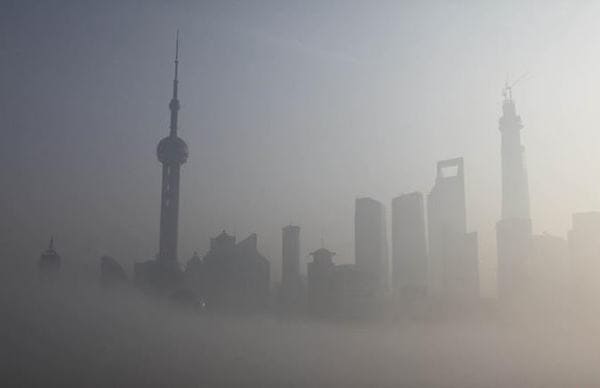
From the London smog in 1958, which killed 12,000 people, to 2017, the strictest environmental protection year in history under the Paris Agreement, various anti-haze measures have emerged in an endless stream. These range from masks to air purifiers and then to fresh air systems; even window screens have evolved anti-smog functions. Anti-haze measures are no longer just in our line of sight; they have become a popular choice under the "smog siege" and have directly entered our lives.
Air purifiers or fresh air systems? The pace of change always moves forward accompanied by controversy.
A fresh air system is a new type of indoor ventilation and exhaust equipment. It is an open circulation system that allows people to breathe fresh, clean, and high-quality air even indoors. The fresh air machine uses patented fresh air convection technology. Through autonomous air supply and induction, it enables indoor air convection, thereby maximizing indoor air replacement. The built-in multi-functional purification system of the fresh air machine ensures that the air entering the room is clean and healthy.
An air purifier is mainly composed of systems such as laser dust particle sensors, motors, fans, and air filters. Its working principle is: the motor and fan inside the machine circulate indoor air, and the polluted air passes through the air filter inside the machine to remove or adsorb various pollutants. The filtered air is then sent out by the micro-fan to achieve the purpose of cleaning and purifying indoor air.
After in-depth consultation with relevant experts and professors from the Institute of Modern Physics of the Chinese Academy of Sciences, the relationship between air purifiers and fresh air systems has gradually become clear.
The National Energy Foundation and Management Standardization Technical Committee held a national standard review meeting in Beijing for "Energy Efficiency Limits and Energy Efficiency Grades for Air Purifiers." This standard hopes to improve the energy utilization efficiency of air purifiers by researching and determining energy efficiency limit indicators and grades that are compatible with international levels and suitable for China's national conditions, guiding progress in energy-saving technology, and enhancing public awareness of energy conservation and environmental protection. At the same time, it provides a clear reference for consumers' consumption choices.
In March 2016, the newly revised national standard for "Air Purifiers," approved and released by the National Standards Committee, was officially implemented. The new standard added two core indicators: Clean Air Delivery Rate (CADR) and Cumulative Clean Mass (CCM). CADR is the amount of clean air provided to the room per hour of operation by the air purifier. A larger CADR value means higher efficiency in purifying air, but considering noise and energy efficiency, this indicator is not necessarily better if it is larger. CCM refers to how much weight of pollutants the filter in the purifier can filter; the larger the value, the longer the filter life. In addition, the new national standard divides the noise limit of air purifiers into 4 levels from low to high, and at the same time increases the energy efficiency level values of air purifiers for different pollutant purification capabilities. The higher the energy efficiency, the more power-saving the machine.
It can be said that if an air purifier meets the "three highs and one low" standard, it absolutely qualifies as a good product—high CADR value, high CCM value, high energy efficiency value, and low noise value.
Over the past 7 years, the annual sales volume and annual sales of air purifiers in China have maintained a growth rate of about 20%. In cities with severe smog, air purifiers equipped with particulate matter sensors have become daily household appliances, and many families have begun to use or consider purchasing higher-priced fresh air systems.
What exactly is the relationship between a fresh air system and an air purifier? After installing a fresh air system, is the haze removal effect necessarily better than that of an air purifier?
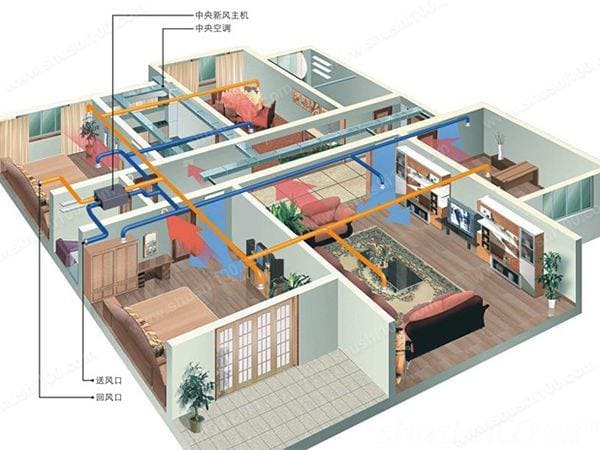
A fresh air system is not an upgraded replacement for an air purifier; the two have a complementary relationship. Currently, both air purifiers and fresh air systems have added air dust sensors to strengthen monitoring functions.
An air purifier purifies indoor air through internal circulation, while a fresh air system is an external circulation that filters outdoor air before bringing it indoors and pushing dirty indoor air out. In addition to reducing fine particulate matter, bacteria, and dust in the air, the fresh air system also has the function of removing carbon dioxide and formaldehyde.
The deficiencies of both are equally obvious: even if a purifier can be loaded with formaldehyde removal functions, it is still powerless against carbon dioxide; a fresh air system brings fresh air into the room at one time, unlike a purifier which has a second purification opportunity, and it brings problems such as installation, consumables, energy consumption, and indoor temperature changes caused by heat exchange.
When purchasing fresh air purification products, focus on three points: the ability to provide fresh air in low-noise operation mode, clean air delivery rate, and the lifespan of consumables.
Regarding the dust sensors required for fresh air systems and air purifiers, Luftmy PM2.5 dust sensor application fields include: air purifiers, air conditioners with purification functions, PM2.5 detectors, range hoods, smoke alarms, fresh air systems, dedicated PM2.5 sensors, air detectors, etc.
