

Technical Support:
158-7527-1139

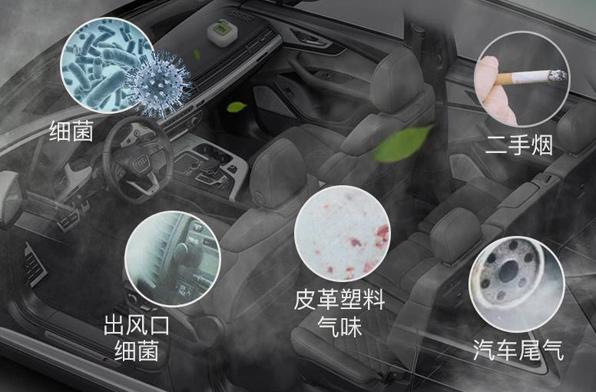
The continuous improvement of living standards has driven an increasing demand for cars. However, with the spread of air pollution and vehicle-related pollution, it has become difficult for people to enjoy fresh air while driving. The in-car environment is poor and has odors, yet opening the window reveals outdoor air that is even worse than inside. Moreover, many people do not fully understand the pollutants in the car environment. Below, the Luftmy editor will discuss the types of pollutants in cars and how to detect and treat them.
1. What are the pollutants in the car
① Moldy smell: This may be caused by the car's air conditioning system not being cleaned for a long time, leading to bacteria in the evaporator and air ducts, resulting in odors from bacterial mold;
② Gasoline smell: Aging of the rubber piping of the gasoline evaporation canister; leaks at the gasoline pipe interface that need tightening/repair; or poor sealing performance after disassembling the gasoline pump. Filling the car with too much fuel can also cause a strong gasoline smell, which can be detected by relevant PM2.5 detectors equipped with particle concentration sensors;
③ After buying a new car, a strong smell of plastic and rubber can be detected when opening the door. In extreme cases, sitting in the car for a long time may cause passengers to vomit or faint. The Luftmy editor has learned that these primarily originate from the interior, including the dashboard, doors, seats, and a series of plastic and leather-covered parts. Plastic parts produced within a few months have a faint smell, determined by their chemical stability;
Additionally, glue is used to bond the plastic skeleton and leather. The glue itself contains a series of irritating odors such as benzene compounds and hyaluronic acid, which are consistent with the "new car smell." After exposure to the sun, these items emit harmful substances like formaldehyde, benzene, TVOC, and xylene, affecting human health.
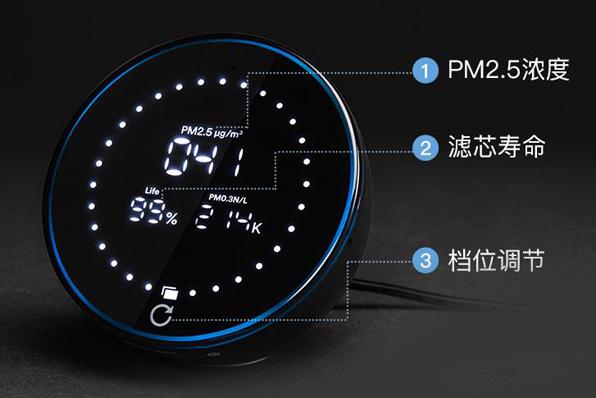
2. How to detect and treat in-car pollution
For these invisible gases, we can only detect their presence through air quality sensors. Through the LED digital display, we can intuitively know which pollutants are in the air and what their concentration is. If the air quality sensor module is installed inside an air purifier, it not only achieves monitoring but can also automatically turn on the air purifier whenever pollution reaches a certain level, ensuring our air remains fresh at all times.
