Technical Support:
158-7527-1139

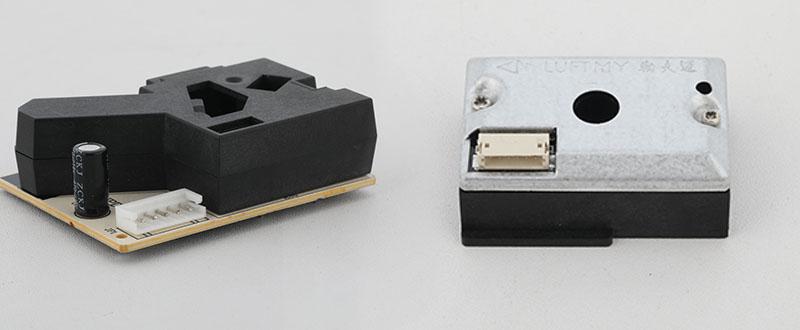
Dust sensors are mainly used to detect dust concentration in the environment. Currently, people's requirements for living, working, and residential environments are becoming higher, and the hazards of productive dust to the human body are increasingly prominent. Their working principles mainly include light absorption, light scattering, β-ray, microcomputer laser, and AC electrostatic induction principles. They are primarily suitable for various research institutions, meteorology, public health, industrial labor health engineering, and atmospheric pollution research. Dust sensors are widely used in CDC, mining and metallurgy, chemical manufacturing, health supervision, and environmental monitoring. There are five main rapid detection methods: light scattering, β-ray, micro-gravimetric balance, electrostatic induction, and piezoelectric balance. Instruments using micro-gravimetric balances are currently almost monopolized by a few American companies, with high prices and maintenance costs. Electrostatic induction instruments are generally used to detect leaks in baghouses after bag filters. The piezoelectric balance method is more complicated to use, and there are few manufacturers.
There are many foreign and domestic manufacturers of light-scattering dust sensors. These are further divided into ordinary light scattering and laser light scattering methods. Because laser light scattering instruments have better repeatability and stability, they have completely replaced ordinary light scattering methods in Europe, America, and Japan. By choosing a reputable manufacturer, high cost-performance can be achieved. The quality of domestic sensors varies greatly, so care should be taken to select manufacturers with guaranteed quality.
The main application scenarios for dust sensors include:
1. Measurement of dust concentration at production sites for labor departments of industrial and mining enterprises;
2. Monitoring of inhalable particulate matter in public places for health and anti-epidemic stations;
3. Atmospheric dust detection and pollution source investigation for environmental protection monitoring departments;
4. Municipal smoke monitoring;
5. Field testing for scientific research, filter material performance testing, etc.;
6. On-site dust concentration measurement and exhaust outlet dust concentration monitoring;
7. Pharmaceutical manufacturing testing;
8. Occupational health and safety inspection;
9. Management of manufacturing processes for precision instruments, testing instruments, electronic components, food, medicine, etc., in factories requiring clean air;
10. Various research institutions, meteorology, public health, industrial labor health engineering, atmospheric pollution research, etc.;
11. Dust detection at construction or blasting sites; exposure monitoring at construction sites;
12. Indoor air quality testing.
Which fields are you interested in? Leave us a message, and our authoritative team will answer your questions.