

Technical Support:
158-7527-1139

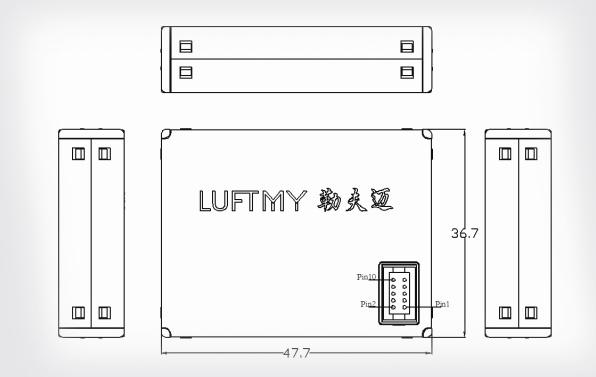
Dust identification sensors are embedded in various instruments and environmental improvement devices related to the concentration of suspended particulate matter in the air, such as air purifiers, air conditioners with purification functions, and PM2.5 detectors, to provide timely and accurate concentration data.
Laser dust particle counters are often used to detect the concentration of suspended particulate matter in the air to determine whether the concentration complies with relevant national standards. So, what is the working principle of a laser dust particle counter sensor?
In a dust particle detection laser sensor, light from a light source is focused by a lens into a measurement chamber. When each micro-particle in the air passes quickly through the chamber, it scatters the incident light once, forming an optical pulse signal. This optical signal is sent to a photodetector, converted into an electrical pulse signal, and then amplified and discriminated by the instrument's electronic circuits to pick out the required signal, which is then displayed via a counting system.
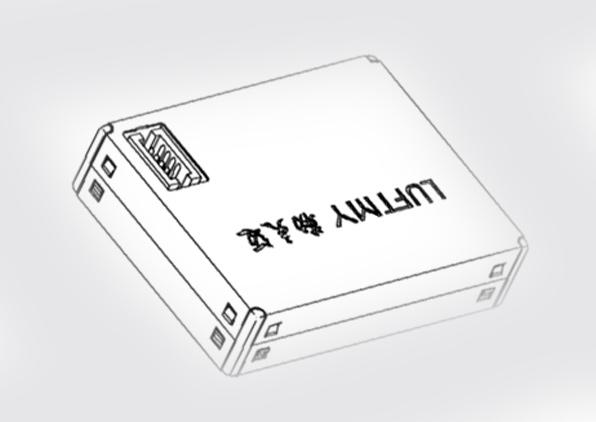
Particles in the air scatter light when illuminated, a phenomenon called light scattering. Light scattering is related to factors such as particle size, light wavelength, particle refractive index, and light absorption characteristics. However, regarding scattering intensity and particle size, there is a basic law: the intensity of scattered light increases as the surface area of the particle increases. Thus, by measuring the intensity of scattered light, the size of the particle can be inferred. This is the basic principle of light-scattering particle counters.
In practice, the scattered light intensity produced by each particle is weak, appearing as a very small optical pulse. It must be amplified by a photoelectric converter to transform the optical pulse into an electrical pulse with a larger signal amplitude, which is then further amplified and discriminated by electronic circuits to complete the counting of a large number of pulses. At this point, the number of electrical pulses corresponds to the quantity of particles, and the amplitude of the pulses corresponds to the size of the particles.
The air quality sensor module LD11 is a high-precision particulate matter concentration sensor based on laser MIE scattering theory. The air quality detection sensor can continuously collect and calculate the number of suspended particulate matter of different sizes per unit volume (i.e., particle size distribution), convert it into mass concentration, and output it via a universal digital interface. It can accurately detect the quantity of dust particles of different sizes in clean environments per unit volume, outputting particle counts for 0.3μm, 0.5μm, 1.0μm, 2.5μm, and 10μm simultaneously. With its thin and light design, it is suitable for detectors, wearable devices, air purifiers, and fresh air systems.
