

Technical Support:
158-7527-1139


Washing machines are essential household appliances that help us clean clothes and remove dirt. However, the water quality of the washing machine also affects the washing effect. If the water quality is too dirty, the washing machine will find it difficult to wash the clothes clean, and it will also breed bacteria, affecting health. Therefore, it is very necessary to regularly detect the degree of turbidity of the washing machine water.
Currently, the commonly used washing machine water quality detection methods mainly include the following:
● Visual Method: This method is relatively simple, requiring only observation of the color and transparency of the washing machine water. If the water quality is very dirty, the water will appear turbid, and even obvious dirt can be seen.
● Touch Method: This method is also relatively simple, requiring only touching the washing machine water with your hands. If the water quality is very dirty, the water will feel sticky or even greasy.
● Test Strip Method: This method uses specialized test strips to detect the degree of turbidity of the washing machine water. There are stripes of different colors on the test strip, each color corresponding to a different degree of turbidity.
Although these three methods are simple and easy to perform, their accuracy is not high. The turbidity sensor is a sensor specially used to measure water turbidity. It has the advantages of high accuracy and convenient use, making it an ideal choice for detecting the degree of turbidity of washing machine water.
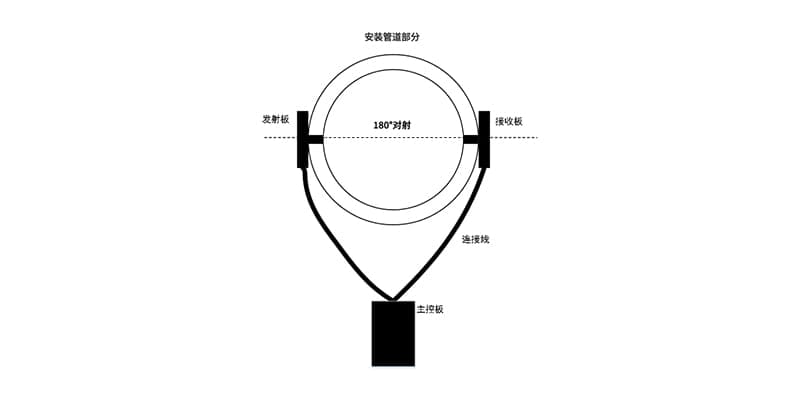
The working principle of the turbidity sensor is based on the principle of light refraction. When light passes through water, it is scattered by suspended particles in the water. The intensity of the scattered light is proportional to the turbidity of the water. There is a light source and a photoelectric receiver inside the turbidity sensor. After the light passes through the water, the photoelectric receiver converts the scattered light into an electrical signal. By measuring the intensity of the electrical signal, the turbidity of the water can be calculated.
The turbidity sensor can be directly installed in the washing machine. By detecting the turbidity of the washing machine water in real time, it can control the washing time and the number of rinses. This ensures that clothes are washed clean while also saving water and electricity resources.
The following are the specific steps on how to use a turbidity sensor to detect the turbidity level of washing machine water:
● Install the turbidity sensor in the washing machine.
● Turn on the washing machine and fill the washing tub with water.
● Start the washing machine and wait for the washing program to start running.
● The turbidity sensor will detect the turbidity of the washing machine water in real time and display the results on the screen.
If the turbidity of the washing machine water is high, the washing time and the number of rinses need to be increased. If the turbidity of the washing machine water is low, the washing time and the number of rinses can be reduced.
By using a turbidity sensor, the washing effect of the washing machine can be effectively improved, water and electricity resources can be saved, and the environment can be protected.
