

Technical Support:
158-7527-1139


Dust sensors detect the dust content in the air environment through light scattering and convert it into a voltage output. Detectable dust types include cigarette smoke particles, bedding dust, house cleaning dust, lice, pet hair, etc.

There are two types of PM2.5 sensors: infrared and laser. They differ in structure and performance. Laser sensors are more expensive but offer better precision and consistency. Luftmy will explain the differences.
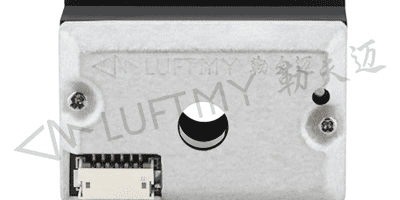
The HPD05 infrared dust sensor is larger than the GDS06, with a semi-transparent air inlet and exposed circuit board. The smaller GDS06 has the PCB inside. When parallel monochromatic light enters the particle field, it is scattered and absorbed, causing light attenuation. This determines the relative attenuation rate of the concentration field, which linearly reflects the dust concentration. Light intensity is proportional to the photoelectric signal, allowing for dust concentration measurement.
Laser dust sensors use laser technology to measure dust concentration. Composed of a fan, laser diode, receiver, and circuit, they accurately measure particles in the air. Currently the highest precision dust sensors, they are praised for low error rates and consistency. What is the working principle? Luftmy will explain below in detail to help everyone understand.
The PM2.5 sensor is a particulate matter sensor, also called a dust sensor, which is a photoelectric sensor that detects air based on the laser beam scattering principle. Photoelectric sensors are one category; there are many other classifications based on working principles. Below, the Luftmy editor will introduce the detailed classification of sensors.
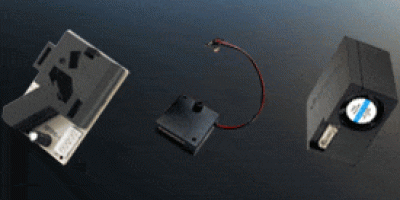
A sensor is a common but very important device that senses various measured quantities and converts them into useful signals according to certain rules. It can be said that sensors are the foundation of the Internet of Things, and dust/fine dust sensors are the foundation of air purifiers. Only with more advanced sensor technology can the IoT industry enter a fast lane of development.
From production to sales, a sensor must go through a calibration process. Only sensors that pass the calibration test are considered truly qualified. Because sensors convert other measured information into electrical signals or other required formats (such as dust sensors measuring PM2.5 concentration), consistency of results is very important. Only through calibration can the consistency of the sensor's output be guaranteed, making it a qualified sensor.

Testing A PM2.5 sensor is also known as a dust sensor or particulate matter sensor; it can detect the concentration of dust particles in the surrounding air. In aerodynamics, dust with a diameter smaller than 10 microns can enter the human pulmonary alveoli through organs. Particles larger than 10 microns are deposited through impact, mostly in the nasopharynx. However, dust smaller than 10 microns enters the respiratory tract, and those smaller than 5 microns deposit directly in the alveoli, which can cause respiratory infections or even lung diseases.
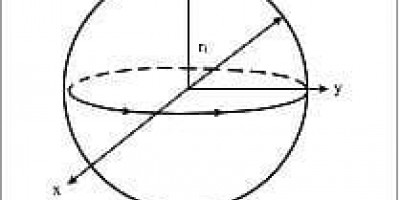
Laser microsphere sensors use total internal reflection to confine light in a whispering gallery mode, resulting in extremely low loss and high sensitivity.
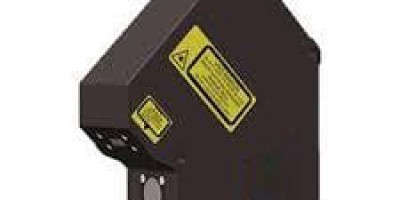
3D laser sensors capture graphics by visualizing object features and converting them into data processed by computers. They consist of three main parts.
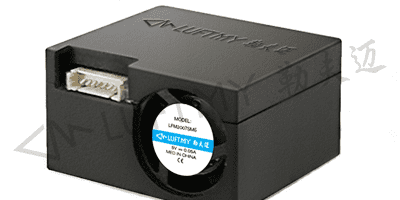
Laser thickness sensors use laser technology to measure the thickness of objects and convert it to analog or digital signals. They are used for geometric measurements.
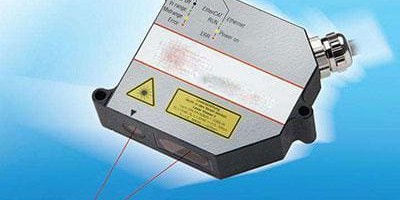
Luftmy laser dust sensors use Mie scattering theory to detect particulate concentration by analyzing light scattered by particles in the air.
