

Technical Support:
158-7527-1139

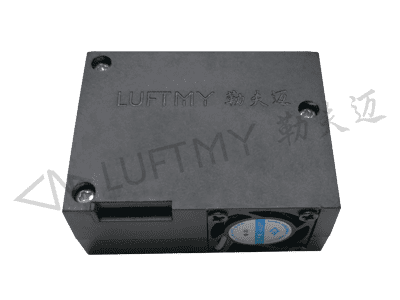
There are two types of PM2.5 sensors: infrared dust sensors and laser dust sensors. They differ in structure and performance. Compared to infrared dust sensors, laser dust sensors are more expensive but offer better accuracy and consistency. Below, the Luftmy editor will help you understand the differences between these two types of PM2.5 sensors.
1. Structure and Principle
The structure and circuit of an infrared dust sensor are relatively simple. Its light source is an infrared LED. The airflow in and out mainly depends on resistance heating to obtain thermal airflow. It outputs a high level when particles pass through. The output signal is only a PWM type.
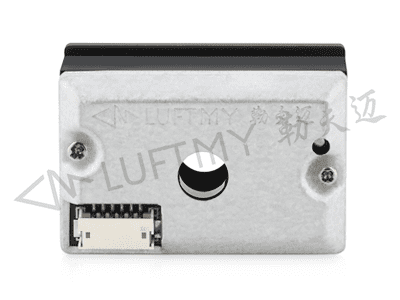
The structure and circuit of a laser sensor are relatively complex. Its light source is a laser diode. The sampling air is pushed by a fan or blower through a complex designed air duct for detection. When fine particulate matter in the air enters the area where the laser beam is located, it causes the laser to scatter. Scattered light radiates 360° in space. We place a photodetector in an appropriate position so that it only receives scattered light. Then, the photoelectric effect of the photodetector generates a current signal. After circuit amplification and processing, the concentration value of fine particulate matter can be obtained. The output signal is generally a serial port output.
2. Measurement Accuracy
Infrared dust sensors can only detect particles above 1um, and the measurement accuracy is insufficient. Because the particle signal scattered by infrared LED light is weak, it only responds to large particles greater than 1um. Furthermore, it only uses a heating resistor to drive the sampling airflow, resulting in fewer samples, and data calculation is entirely left to the host computer. In contrast, laser dust sensors can detect particles above 0.3um. Because they come with a high-performance CPU and use a fan or blower to collect a large amount of data analyzed by professional particle counting algorithms, they have more advantages than infrared dust sensors in terms of sampling numbers, data sources, and algorithms.
3. Price and Cost
Infrared dust sensors have been maturely applied in the industry for many years, with a market price of about 35-50 yuan. Laser dust sensors have a market price of 90-180 yuan.
The Luftmy editor noticed that the cost gap between the two is mainly because the latter adds laser generators and fans to the material costs, requires a complex circuit structure, and has a higher technical threshold.
4. Application Scenarios
Due to insufficient accuracy, infrared sensors are mainly used for dust in industrial and mining areas. The detection objects are large particle size and high-concentration dust, with a detection level of mg/m3. It cannot accurately measure the concentration of PM2.5.
Laser sensors are mainly applied in the field of PM2.5 detection to quantify PM2.5 mass with precision. They can be embedded in household (vehicle-mounted, handheld) air detectors and air purifiers. In addition, laser sensors are also used in IoT data collection, environmental quality detection, and other fields.
5. Development Trends
Before laser dust sensors entered the civilian field, infrared dust sensors were widely used in air purifiers. However, with the development of the air purifier industry and the mass production of laser dust sensors by some large manufacturers, the cost of laser dust sensors is gradually decreasing. At the same time, terminal customers have higher and higher requirements for accurate air quality measurement. It is an industry-recognized trend to adopt laser principle sensors to precisely quantify PM2.5 mass.
