Technical Support:
158-7527-1139

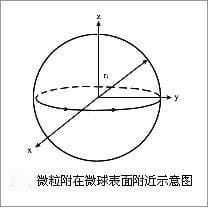
The principle of the laser microsphere sensor is the continuous occurrence of total internal reflection on the surface of the microsphere. The microsphere laser sensor confines light around the equatorial plane and orbits along the outer circle, exciting a unique Whispering Gallery Mode (WGM). Due to total internal reflection, the light waves outside the sphere are evanescent waves. These are non-propagating waves, so the light leaking out of the microsphere is extremely weak. Thus, it can confine light in a tiny volume for a long time with almost no quality loss.
Microsphere laser sensors have important applications in fields such as nonlinear optics, cavity quantum electrodynamics, low-threshold laser research, and quantum optics. Due to the microsphere resonant cavity effect of the microsphere laser sensor, the sensitivity and precision performance indicators of biosensors, temperature sensors, and acceleration sensors have been greatly enhanced.
1. Application of laser microspheres in biosensors
Subtle changes are triggered by the interaction between external tiny particles around the microsphere surface and the external evanescent field, causing a shift in the laser wavelength. Using tapered fiber coupling technology, when a beam of light reaches an interface from a certain substance, reflection occurs. Meanwhile, placing the microsphere at an appropriate position in the evanescent field to match the mode of the microsphere sensor allows external light to couple from external propagating waves into the microsphere, exciting the Whispering Gallery Mode in the laser microsphere sensor.
2. Application of laser microspheres in acceleration sensors
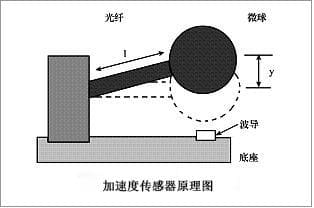
This laser sensor detects through the change in relative distance between the microsphere resonant cavity and the coupling device. At the same time, the microsphere cavity and waveguide are isolated from the bottom layer by a dielectric stack composed of alternating high and low refractive index layers.
3. Application of laser microspheres in temperature sensors
This sensor affects the intrinsic mode of the resonant cavity by changing the refractive index of the microsphere. The laser microsphere sensor exchanges heat with the surrounding air through thermal conduction. Micro-changes in the surrounding air temperature cause significant frequency changes in the laser microsphere sensor. Emission spectra at low temperatures are used to calibrate the intensity ratio versus the microsphere temperature, and the high-temperature range is then calculated based on the relationship between the intensity ratio and temperature.
With the continuous improvement of coupling technology, the precision and sensitivity of laser microsphere sensor will play a major role in the field of sensor technology.
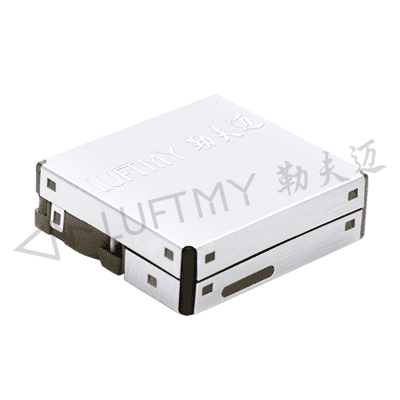
P.S. The LD09 laser dust sensor is a high-precision particulate matter concentration sensor based on the Laser Mie Scattering theory. It can continuously collect and calculate the number of suspended particles of different sizes per unit volume of air, i.e., the particulate matter concentration distribution, which is then converted into mass concentration and output via a universal digital interface. This sensor can be embedded in various instruments or environment improvement equipment related to suspended particulate matter concentration in the air to provide timely and accurate concentration data.