Technical Support:
158-7527-1139

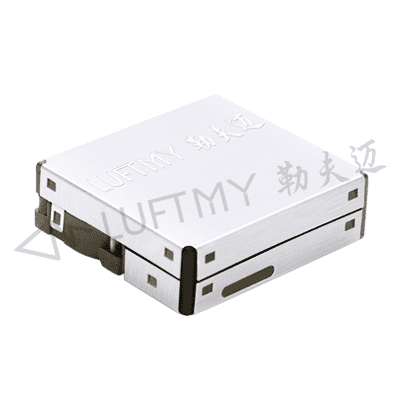
There are many types of laser sensors on the market, and different types of laser sensors have unique principles. For example, the laser dust sensor developed by Luftmy is a high-precision particulate matter concentration sensor based on the Laser Mie Scattering principle. That is, the laser sensor uses laser light to irradiate suspended particles in the air to form light scattering. A photodetector collects the scattered light intensity within a specific angular range, and the data processing system processes the data according to pre-compiled programs based on Mie scattering theory to obtain the concentration of particulate matter.
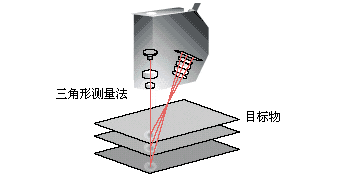
This article mainly introduces another principle of laser sensors——the triangular reflection measurement principle. The triangular reflection measurement principle is mainly composed of a laser diode, photosensitive element (CCD/CMOS), signal receiver, etc.
The laser beam emitted by the laser diode hits the surface of the object being measured, and the reflected light passes through a lens and is projected onto the photosensitive element. Since the intensity of the reflected light depends on the surface characteristics of the measured object, specific values are obtained through signal receiver processing. The laser transmitter projects onto the measured object to form a visible light spot, and the maximum measurement distance can be up to 1m depending on different measured objects. In addition, it must be ensured that no other interference, such as air particles, appears within the measurement range of the laser sensor, and the position of the measured object must also be considered.
Advantages of using the laser triangular reflection measurement principle:
1. Large installation distance.
2. Small measurement spot.
3. Can measure large ranges.
4. Wide range of materials for the measured object.
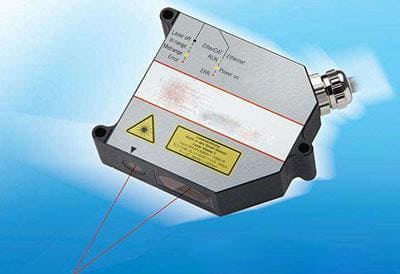
Due to its extremely high measurement precision and tiny measurement spot diameter, laser triangular reflection measurement is widely used in many fields on the market. It can perform long-distance measurement of objects and adapt to compact precision measurement components.
Laser sensor application areas: air purifiers, air conditioners with purification functions, PM2.5 detectors, range hoods, smoke alarms, fresh air systems, dedicated PM2.5 sensors, air detectors, wearable devices, etc.