

Technical Support:
158-7527-1139

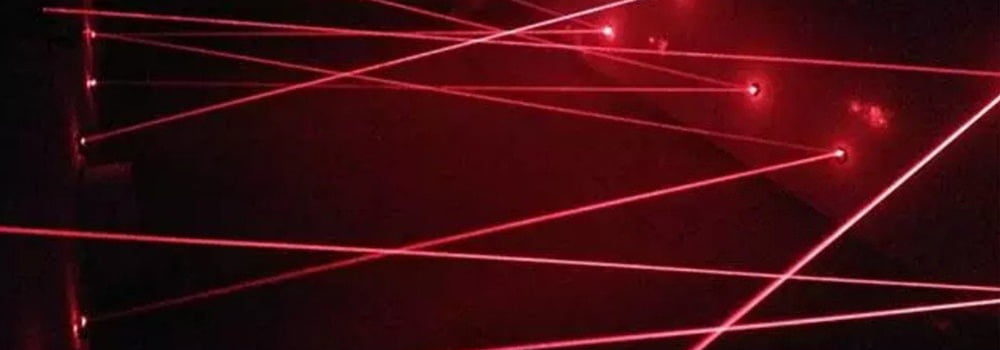
An infrared sensor is a device that uses infrared light to perceive, receive, and analyze information from a target object. It can detect invisible infrared light and trigger alarms or perform specific tasks based on the heat or radiation emitted by the target. It is widely used in security monitoring, temperature measurement, automation systems, and other fields.
Below, let us take an in-depth look at its working principle, classification, and development trends in recent years.
Infrared Rays and Infrared Light
Before interacting with infrared sensors, it is important to understand the concept of infrared rays or infrared light. Generally, the range of light waves that humans can perceive is from 400nm (violet) to 700nm (red). Infrared rays are radiation with wavelengths between 760nm and 1mm, which are invisible to the naked eye but can be sensed through special optical equipment.
Infrared light not only possesses the characteristics of light but also has a significant thermal effect. Any object above absolute zero (-273.15°C) will produce infrared radiation.
Classification and Principle of Infrared Sensors
● Active Infrared Sensors: The transmitter emits a modulated infrared light beam, which is received by the receiver to form a security line. An alarm will not be triggered for obstructions like leaves, rain, small animals, or snow, but an alarm is generated when a person or an object of similar volume blocks the beam.
● Passive Infrared Sensors: These work by detecting infrared radiation released by the human body. The sensor uses pyroelectric elements; when infrared radiation is received and a temperature change occurs, it releases an electric charge, thereby triggering an alarm.

Advantages of Infrared Sensors
● Environmental Adaptability: Good ability to work at night and in harsh weather conditions.
● Stealth: High security and confidentiality as they passively receive signals.
● Identification Capability: Strong ability to identify camouflaged targets by detecting the temperature and emissivity difference between the background and the target.
● Compact Volume: Small size, light weight, and low power consumption compared to radar systems.
Recent Development Trends
● New Materials and Processing Technologies: Improving infrared detection rates, increasing response wavelengths, shortening response times, and reducing production costs.
● Large-scale and Multi-functionalization: Transitioning from small single-function to large multi-functional units, such as large sensors with human detection capabilities.
● Intelligence: Built-in microprocessors providing advanced digital signal processing, self-diagnosis, and two-way digital communication functions.
● Miniaturization and Integration: Using on-chip integration technology to reduce size and power consumption while increasing integration.
Infrared sensors have not only demonstrated significant roles in environmental monitoring and security but are also constantly advancing through technological innovation. Their evolving characteristics and application prospects lead the transformation of technology. Through new materials, intelligent technology, and miniaturization trends, infrared sensors are moving towards a more efficient and intelligent future. Over time, our reliance on and research into infrared sensors will deepen, fueling the pace of scientific and technological progress.
