

Technical Support:
158-7527-1139

A gas sensor is a device that converts information such as gas composition and concentration into data that can be used by personnel, instruments, and computers. “Gas sensors” include: semiconductor gas sensors, electrochemical gas sensors, catalytic combustion gas sensors, thermal conductivity gas sensors, infrared gas sensors, solid electrolyte gas sensors, etc. Gas sensors also have wide applications in daily life.

More than 90% of harmful gases in newly renovated rooms exceed safe limits. Taking formaldehyde as an example, the concentration can be over 2.5 ppm when a new home is first decorated, and some can even reach dozens of ppm (the GBT18883-2002 indoor air quality standard stipulates that the formaldehyde content should not exceed 0.1mg/m3, which is 0.074 ppm). The traditional approach is to leave the newly renovated house vacant for six months while keeping it ventilated to allow harmful gases to volatilize before moving in. However, this time-consuming effort only reduces the hazard by avoiding the peak period of formaldehyde and does not eliminate the danger.
By applying gas sensors to the home environment, one can use independent gas detection products for VOCs like formaldehyde, benzene, and toluene, or integrate gas sensors into air conditioners and air purifiers. This combines indoor pollution detection with treatment, providing maximum protection for vulnerable groups like the elderly, children, and pregnant women while giving peace of mind to family members working outside.
According to surveys, 93.6% of new cars have serious indoor air pollution. The main sources are the car body itself and decorative materials, with toxic substances like formaldehyde, xylene, and benzene being the most serious as they may induce cancer. Another hazardous gas in vehicles is carbon monoxide, known as the “silent killer.” It mainly comes from the engine and exhaust, produced when the air conditioner is running while parked. If it accumulates, occupants may die from odorless gas poisoning without realizing it.
Using suitable gas sensors can not only monitor VOCs like formaldehyde, xylene, and benzene but also monitor carbon monoxide levels in the car, acting as a safety warning to prevent tragedy.
Indoor PM2.5 mainly comes from smoking, cooking fumes, and incomplete gas combustion. It can lead to various diseases, especially harming the elderly, children, infants, or those with respiratory and cardiovascular conditions. Traditional methods like opening windows or using range hoods cannot ensure indoor air cleanliness.
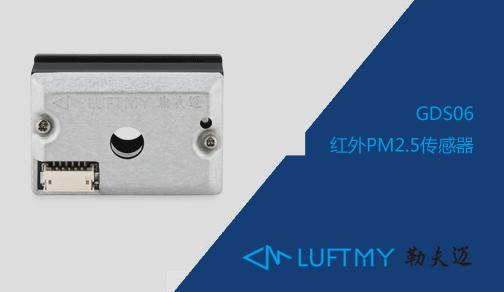
The Luftmy GDS06 infrared PM2.5 dust sensor counts the number of particles in the air through the scattering effect of infrared light. It can sensitively detect particles larger than 0.3um. The built-in heater allows for automatic air suction, reducing measurement errors, and its small size makes it easy to install.
Beyond daily life, gas sensors are used in industry for combustible gas alarms and identifying gas characteristics. With further R&D, the application fields for gas sensors will continue to expand.
