Technical Support:
158-7527-1139

With the development of technology and the arrival of the 5G era, the concepts of smart home and the Internet of Everything (IoE) have deeply integrated into daily life. Smart door locks, smart appliances, and smart audio-visual systems have gained significant attention. All these smart home systems rely on an essential component: the sensor. Many people may not have a clear concept of sensors, yet they are closely related to our lives. What sensors are generally required for a smart home?
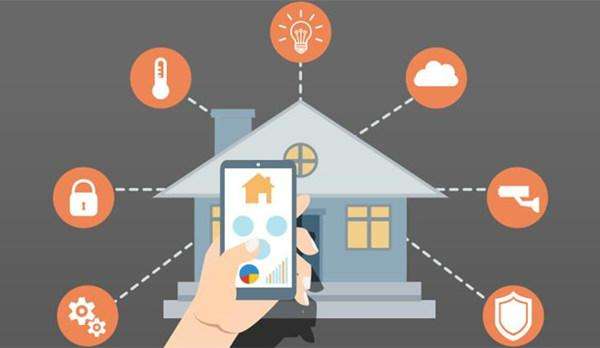
Temperature sensors ensure a constant room temperature in a smart home and are an indispensable part of the system. In practice, temperature sensors can adjust the temperature based on seasonal changes or user needs.
For temperature measurement, temperature sensors collect thermal information. In modern smart homes, chosen sensors must be stable and high-performing. They convert digital signals into electrical signals, which are sent to the computer system via control logic, then transmitted through the central control system to the air conditioner to achieve automated climate control.
Image Sensor
In smart home applications, image sensors are equally vital. In modern construction, monitoring equipment is required for internal and perimeter security. Traditional methods relied on cameras that couldn't transmit real-time alerts to users; if the system was damaged, it resulted in significant losses. In a smart home system, PC-based monitoring can send information to a user's phone or computer for remote oversight. Smart monitoring utilizes image sensors (mainly CCD and CMOS) for photoelectric conversion, enabling digital video recording and comprehensive control over the property.
Photoelectric Sensor
In traditional living, using water, power, and light sources required manual switching. In a smart home, photoelectric sensors enable automated control. Photoresistors can be used to design automatic lighting, and infrared sensing systems allow for convenient home illumination without manual intervention. Additionally, infrared sensors can control faucets and monitor humidity, which saves resources and enhances the user experience.

Air Sensor
Air sensors monitor the environment in real-time. Once safety indicators are exceeded, they trigger home air purification equipment to create a healthy environment for the family. The Luftmy LD13 laser dust sensor can be embedded in various instruments or environment improvement devices. It uses MIE spherical scattering principles combined with Luftmy's spatial measurement patent to provide timely and accurate concentration data for real-time air quality monitoring.
Besides the sensors mentioned above, many others are used in medical, technological, and military fields. In summary, as technology develops, smart devices have become integral to our lives, and the future of sensors will see rapid growth.