

Technical Support:
158-7527-1139

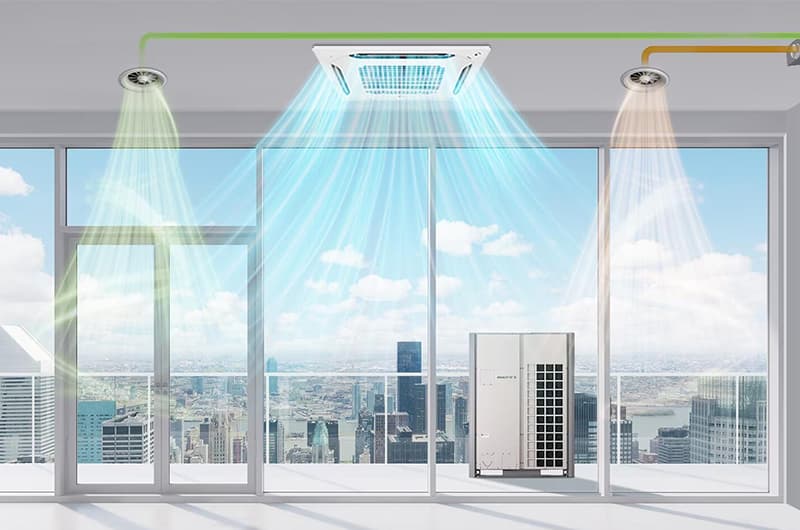
As public concern for indoor air quality continues to grow, fresh air systems are becoming increasingly common. These systems achieve automated management through fresh air control panels to ensure the supply of fresh indoor air while improving energy efficiency. This article will delve into the working principle of fresh air control panels and explain their key role in improving the indoor environment.
Introduction to Fresh Air Systems
A fresh air system is a system used to provide fresh air and exhaust stale air to maintain indoor air quality. They are typically integrated with HVAC systems and managed intelligently via a fresh air control panel. The main components of a fresh air system include supply fans, exhaust fans, filters, air ducts, and the control panel.
Key Functions of the Fresh Air Control Panel
The fresh air control panel is the intelligent brain of the fresh air system, featuring the following key functions:
1. Fresh Air Supply Regulation: The control panel can automatically adjust the supply of fresh air according to the needs of indoor air quality. Adjustments are usually based on parameters such as indoor $CO_2$ concentration, humidity, and temperature.
2. Air Volume Control: The control panel can precisely control the volume of supply and exhaust fans to ensure appropriate air exchange rates while reducing energy consumption.
3. Filter System Management: The fresh air control panel can monitor and manage the performance of the filtration system. It reminds users when to replace filters to keep the air clean.
4. Timer Control: The control panel allows users to set operation schedules for the fresh air system to suit different needs. For example, reducing air supply during peak electricity hours to lower energy costs.
5. Smart Sensors: Control panels often integrate various sensors, including $CO_2$ sensors, humidity sensors, and temperature sensors, to monitor indoor environmental conditions. Data from these sensors is used for decision-making to provide optimal indoor air quality.

Working Principle
The working principle of the fresh air control panel involves several steps:
1. Sensor Data Collection: First, the control panel monitors indoor environmental parameters, such as $CO_2$ concentration, humidity, and temperature, through built-in sensors. This data is critical for determining fresh air demand.
2. Air Demand Calculation: Based on sensor data, the control panel uses preset demand models to calculate the volume of fresh air required indoors. This calculation accounts for the number of occupants, indoor activity levels, and other factors.
3. Fan Control: The control panel compares the calculated air demand with the current supply and exhaust air volumes. It then adjusts the air volume by controlling the speed and runtime of the supply and exhaust fans to meet the demand.
4. Filter Management: The control panel also monitors the status of the filters. If a filter becomes ineffective, it triggers an alarm and suggests a replacement.
5. User Interface: Control panels usually feature a user interface through which users can view indoor environmental data, manually adjust settings, or perform other operations.
Advantages and Applications
The application of fresh air control panels not only improves indoor air quality but also reduces energy costs. They are widely used in various locations such as residences, commercial buildings, medical facilities, schools, and factories. Through automated air management, they help improve living and working environments, enhance quality of life, and reduce energy waste.
The fresh air control panel is an indispensable part of modern buildings. By intelligently managing the fresh air system, it ensures indoor air quality while improving energy efficiency. Understanding their working principle and applications helps us better understand how to create healthier and more comfortable living and working spaces in indoor environments.
