

Technical Support:
158-7527-1139

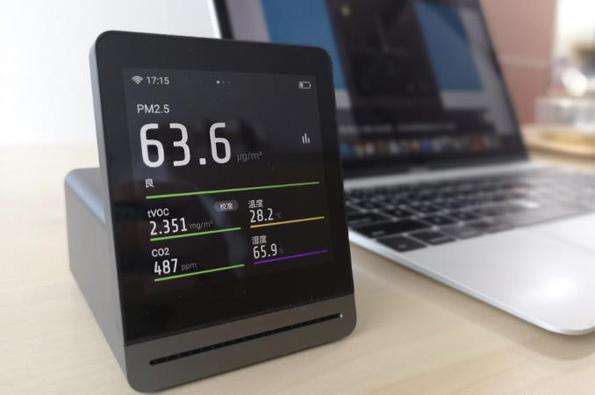
Haze weather does not only appear in winter; it can also occur in summer. For this reason, many home users, while purchasing air purifiers, also place a portable air quality detector, commonly known as a haze meter, in their homes. Luftmy's editor has learned that various brands of air quality detectors and purifiers are selling rapidly in the domestic market. Their prices range from hundreds to thousands of yuan, with some using infrared dust sensors and others using laser dust sensor technology. Simultaneously, the accuracy of these detectors and purifiers has become a common topic of concern.
Currently, the styles of air detectors on the market can be divided into two types: box-type models that look professional, and more commonly, handheld portable models that look like air conditioning remotes. The LCD screen displays values for PM2.5, formaldehyde, temperature, humidity, and Total Volatile Organic Compounds (TVOC).
According to media reports, consumers have fed back that different brands of detectors and purifiers show completely different readings. The reason for this difference is simple: the PM2.5 sensors used in different devices are different. Industry insiders state that from a measurement principle perspective, a haze meter is essentially a dust sensor. Some merchants use large-particle dust sensors and pass them off as PM2.5 air quality sensors. These cannot measure small-diameter PM2.5 at all, and even if they manage to, the accuracy is extremely low. Therefore, for a relatively reliable haze meter, the precision of the PM2.5 sensor must be very high, accurate to single digits.
Generally, haze meters costing only a few dozen yuan definitely use infrared dust sensors. These sensors determine dust concentration through light transmittance and have very low costs. Strictly speaking, they can only detect large particles, so inaccuracies are inevitable. In this case, if you want to buy a reliable haze meter, do not be too greedy for a low price; try to choose a laser dust sensor based on the laser scattering principle, which is more accurate. The laser dust sensor and air quality sensor modules developed and produced by Luftmy are highly recommended.
Luftmy focuses on the research, production, and sales of optical particulate matter and air sensor technologies. Sensors such as air flow sensors have received wide acclaim in the industry for their measurement accuracy, stability, consistency, and anti-interference performance.
