Technical Support:
158-7527-1139

1. What is a fresh air system?
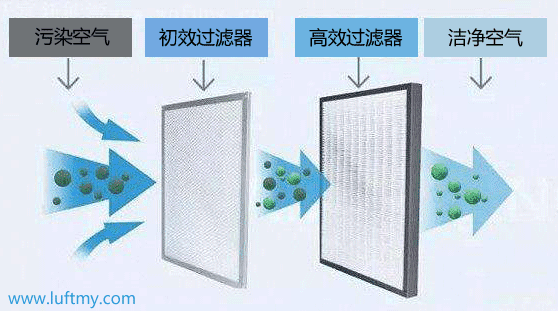
A fresh air system is a new type of indoor air purification equipment composed of a set of forced air supply systems and a set of forced exhaust systems. Its main components include fans, air inlets, air outlets, return air ends, exhaust ports, gas sensors, pipes, and connectors. Fresh air enters the room through the air supply system pipes, and exhaust air is discharged outdoors through the exhaust system pipes, allowing for indoor and outdoor air exchange without opening windows. The ultimate goal is to allow indoor occupants to breathe high-quality, healthy fresh air.
The application advantages of fresh air systems are reflected in:
a. Maintaining indoor air circulation without opening windows, solving indoor ventilation problems;
b. Effectively filtering indoor harmful gases and PM2.5 particulate matter;
c. Avoiding “air conditioning disease” and benefiting human health;
d. Regulating indoor temperature and humidity, preventing dryness and moisture;
2. Application of air quality sensors in fresh air systems
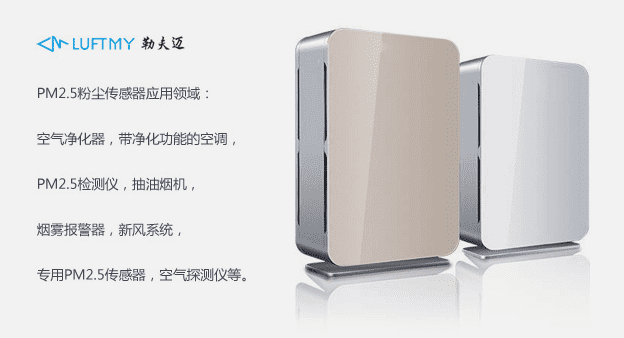
One of the most important functions in a fresh air system is the intelligent filtering of PM2.5 particulate matter in the air. Dust particles in the air enter the human respiratory tract along with breathing, which is very harmful to human health. The higher the PM2.5 concentration, the more serious the air pollution. Dust sensors are key to perceiving dust particles in the air. Dust sensors generally adopt the light scattering detection principle. The light sources mainly include infrared LEDs and lasers. Compared with infrared LED light sources, laser-based dust sensors can detect particles as small as 0.3μm, come with high-performance CPUs, and provide more accurate air quality sensing.
During the detection process of the laser dust sensor, air is sampled into the module via the sensor's fan. The laser beam shines on the particles in the gas to produce scattered light. The photosensitive tube converts the scattered light signal into a pulse electric signal. The electric signal is then filtered, amplified, and processed by a microprocessor to output data, detecting the PM2.5 concentration in the air in real-time. When the concentration is too high, the fresh air system will automatically start the PM2.5 filtration function to achieve air purification.
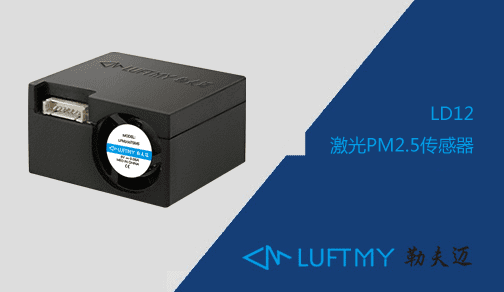
The LD12 Laser PM2.5 Dust Sensor is a high-precision particulate matter concentration sensor based on the Laser Mie Scattering theory. It can continuously collect and calculate the number of suspended particles of different sizes in the air per unit volume (particle size distribution), and kemudian convert it into mass concentration to be output via a universal digital interface. This sensor can be embedded in various instruments or environmental improvement equipment related to suspended particle concentrations, such as fresh air systems, air purifiers, air conditioners with purification functions, PM2.5 detectors, range hoods, smoke alarms, dedicated PM2.5 sensors, air detectors, and wearable devices.
3. Air quality detection solutions for fresh air systems
As China's promotion of fresh air systems increases and consumer awareness improves, fresh air systems are becoming more mature. Users have a strong demand for real-time detection values and supporting control products. Based on years of sensor R&D and application, Guangzhou Luftmy has launched micro-dust sensors and other air sensors to make fresh air system applications more convenient, flexible, and intelligent.
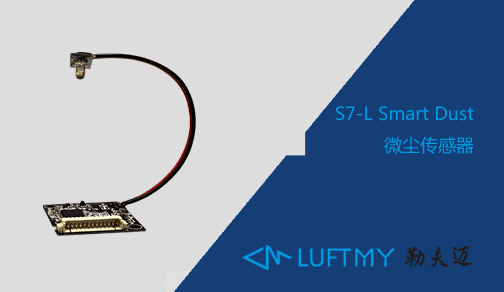
Luftmy micro-dust sensor application areas: vacuum cleaners, sweeping robots, mite removers, smart trash cans, smart detectors, etc.
The S7-L Smart Dust micro-dust sensor utilizes the optical through-beam principle to accurately detect particle count and concentration data in the ventilation ducts of vacuum cleaner handles or extension poles, sweeping robots, range hoods, particle detection instruments, and other equipment.
Benefits for vacuum cleaners and sweeping robots:
a. The cleaning effect of the device and the cleanliness of floors, carpets, and bedsheets are intuitively presented to the user through sensor data and LED color displays;
b. The device intelligently controls the motor speed based on sensor data to achieve noise reduction, energy saving, and power efficiency, while extending motor life.
Today, air quality has long been a key national concern. Simultaneously, gas sensors are moving toward integration, intelligence, and multi-parameter detection. Applying new gas sensors in fresh air systems is of great significance for improving air quality.
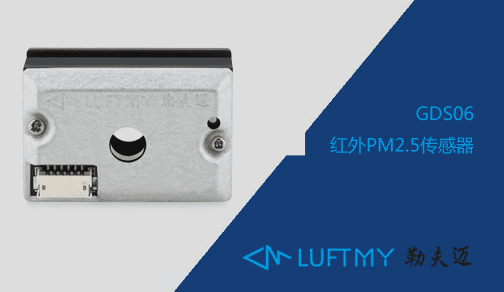
The GDS06 Infrared PM2.5 Dust Sensor uses the principle of optical scattering to obtain particulate matter concentration. This is because particles and molecules produce light scattering when illuminated, while also absorbing part of the light energy. When a beam of parallel monochromatic light enters the particle field, it is affected by scattering and absorption, resulting in light intensity attenuation. Luftmy infrared PM2.5 sensor application areas: air purifiers, air conditioners with purification functions, PM2.5 detectors, range hoods, smoke alarms, fresh air systems, dedicated PM2.5 sensors, air detectors, etc.