As an indispensable tool in modern environmental monitoring, the output signals of air quality sensors are crucial for data interpretation and application. This article will explain in detail the types of signals output by air quality sensors and how these signals are converted into air quality information we can understand.
I. Basic Concepts of Air Quality Sensor An air quality sensor is a high-sensitivity detection device that can monitor pollutants in the air in real-time, such as PM2.5, PM10, sulfur dioxide, nitrogen dioxide, carbon monoxide, and ozone. These sensors are widely used in indoor and outdoor environmental monitoring, industrial emission control, smart home systems, and other fields.
II. Importance of Air Quality Sensor Output Signals The signals output by sensors are the raw form of air quality data. They need to undergo appropriate processing and conversion to become air quality indices or values that we can understand intuitively. Understanding the types of these signals and the conversion process helps us better utilize air quality sensors for environmental monitoring and management.
III. Types of Signals Output by Air Quality Sensors
-
Analog Signals: Many air quality sensors output analog signals, such as voltage or current. These signals are proportional to the concentration of pollutants in the air and need to be converted into digital signals by an Analog-to-Digital Converter (ADC) before they can be displayed and processed on digital devices.
-
Digital Signals: Some modern air quality sensors directly output digital signals, usually transmitted via communication protocols like I2C, SPI, or UART. Digital signals can be directly received and processed by microcontrollers or computers without the need for additional conversion.
-
Pulse Signals: Certain types of air quality sensors, such as those based on light scattering principles, may output pulse signals. The frequency or number of these pulses is related to the pollutant concentration, requiring specific algorithms for interpretation and conversion.
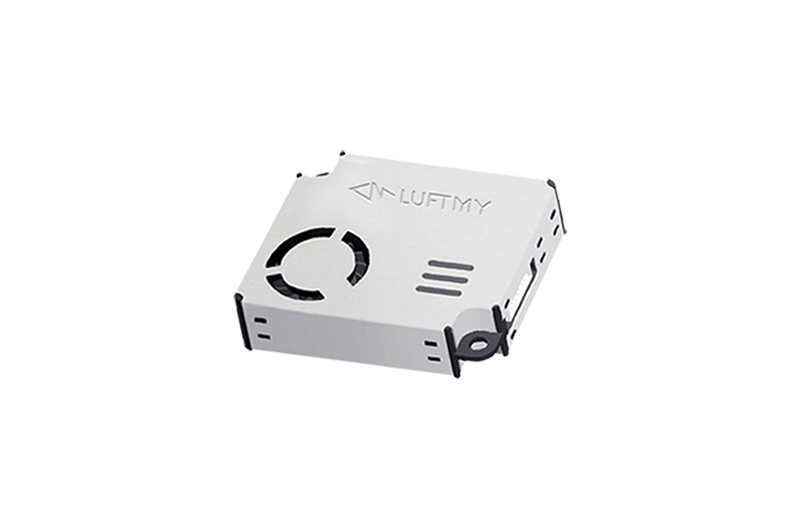
IV. Signal Processing and Conversion The signal processing and conversion process of air quality sensors usually includes the following steps:
- Signal Amplification: Since the signals output by sensors may be very weak, they need to be amplified by an amplifier.
- Analog-to-Digital Conversion: Analog signals need to be converted into digital signals via an ADC for digital device processing.
- Data Processing: Digital signals are processed through built-in or external microcontrollers, including signal filtering, calibration, and conversion into an air quality index.
- Data Output: The processed data can be shown via a display screen or transmitted over a network to a remote monitoring system.
V. Application Scenarios of Air Quality Sensors
- Environmental Monitoring Stations: Real-time monitoring of air quality in cities or industrial zones to provide decision support for governments.
- Smart Home: Integrated into smart home systems to automatically adjust indoor air quality and improve living comfort.
- Automotive Systems: Monitor in-car air quality to protect the health of drivers and passengers.
- Industrial Process Control: Monitor air quality during industrial production processes to ensure worker health and production safety.
VI. Conclusion The signals output by air quality sensors are the foundation of environmental monitoring and data interpretation. By understanding the types and processing of these signals, we can more effectively utilize air quality sensors for environmental management. As technology continues to advance, the signal processing and output methods of air quality sensors are also being optimized to meet higher requirements for accuracy and real-time performance.