

Technical Support:
158-7527-1139


How do air purifiers quickly perceive changes in indoor air quality and provide feedback to users? By changing gears accordingly, they can clean the air more effectively, saving energy and extending the device's life. Contaminant detection is achieved through laser PM2.5 dust sensors installed inside. Luftmy focuses on the research, production, and sales of optical particulate sensor technology, having developed modules like the LD16, a minimal laser PM2.5 sensor for purifiers.
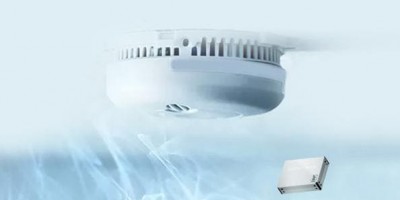
Smoke alarms are common safety devices in modern residential or public places. They generally consist of a smoke sensor and a smoke detection chip. With the development of social technology and increasing safety awareness, installing various fire safety devices has become essential.
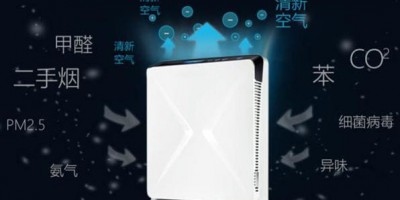
PM2.5 fine particles in indoor air have a significant impact on human health. Since indoor environments are smaller than outdoors, they are easier to control. Therefore, using purification equipment like air purifiers for continuous PM2.5 monitoring and control can effectively improve indoor air quality, enhancing living comfort and protecting human health.
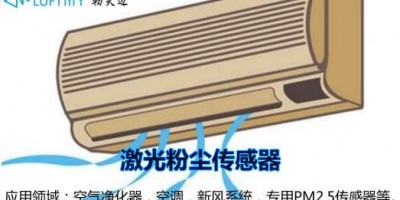
What is particulate matter PM2.5? PM stands for particulate matter suspended in the air. Particles with a diameter of 2.5 microns or less are called PM2.5, also known as fine particulate matter. PM2.5 poses a greater threat to human health because it easily accumulates deep in the lungs, hence it is also called "lung-penetrating particulate matter." It can stay suspended in the air for long periods, and higher concentrations signify more severe pollution.
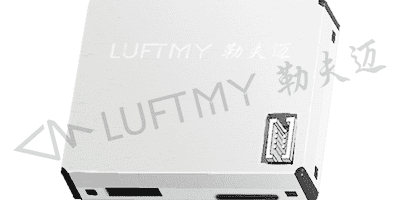
More and more people are discovering that environmental pollution is becoming more serious, while concern for quality of life is growing. Air purification is a major topic in today's society. Dust sensors, as vital tools for measuring air quality indicators, are of paramount importance in air purification applications, being widely used in air purifiers, air conditioners, humidifiers, fresh air systems, and smart homes.

According to the World Health Organization, air pollution is one of the world's largest environmental health risks, with approximately 7 million people dying globally due to air pollution. Exhaust gases from road traffic are the main cause of nitrogen dioxide (NO2) pollution. Inhaling NO2 is harmful to our health; even at very low levels, it can damage our respiratory system and lead to heart and vascular diseases. Therefore, monitoring atmospheric NO2 has become crucial.
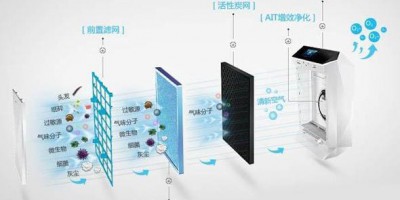
PM2.5 is widely present in our daily indoor environments. Therefore, it is necessary to find an effective way to detect PM2.5 concentration levels in specific environments and provide timely feedback to users' mobile electronic devices when concentrations exceed preset thresholds. This allows users to remotely control relevant equipment via Bluetooth or other means to effectively reduce PM2.5 levels, thereby eliminating the threats posed by excessive PM2.5 concentrations.

With the process of industrialization, the scale of heavily polluting industries such as petroleum, chemical, power, and metallurgy continues to expand. Substandard waste treatment has led to an intensifying trend in atmospheric pollution; combined with the surge in the number of motor vehicles, the concentration of particulate matter in the atmosphere has increased. PM2.5 refers to fine particulate matter in the atmosphere with a diameter of less than or equal to 2.5μm. Influenced by air pressure, temperature, and geographical environment, PM2.5 particles can remain suspended in the atmosphere for long periods. Higher concentrations indicate more severe air pollution.
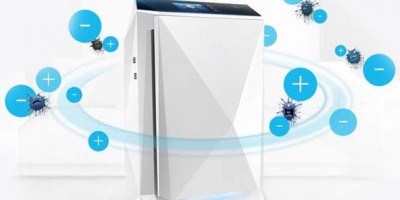
Through the different colors displayed by the LED indicators of the air purifier or the values shown on the LCD screen, we can easily grasp the air quality of our space in real-time. This is very convenient, but how is it achieved? There are many tiny particles in the air that enter our bodies with our breathing, yet they are invisible to the naked eye.

PM2.5 monitoring is now required by national air quality standards. Main methods include light scattering, gravimetric, micro-oscillation balance, and beta-ray absorption.
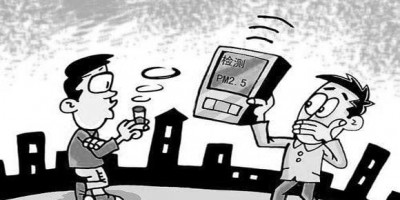
Humans spend 80% of their time indoors. Since air is invisible, how do we judge quality? PM2.5 refers to particles under 2500 nanometers; higher concentrations indicate more serious pollution.
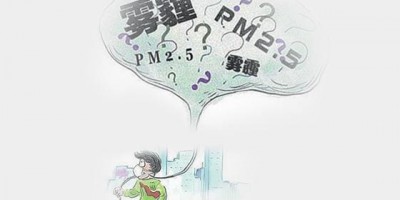
PM10 refers to particles under 10μm, while PM2.5 refers to those under 2.5μm. Smaller particles stay in the air longer and travel further, causing more harm to human health.
