Technical Support:
158-7527-1139

PM10 refers to particles with a diameter less than 10μm that can be inhaled into the human respiratory tract and pose significant health risks. PM2.5 refers to particles in ambient air with an aerodynamic equivalent diameter less than or equal to 2.5 micrometers, also known as respirable particles. PM2.5 particles are small, contain a large amount of toxic and harmful substances, remain in the atmosphere for a long time, and can travel long distances, thus having a greater impact on human health and air quality.
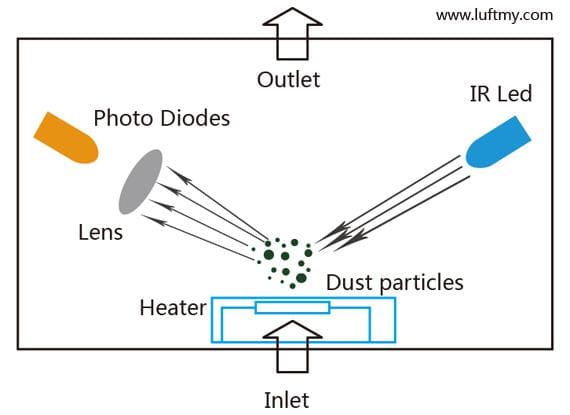
The particulate concentration sensor Infrared PM2.5 sensor detection principle structure is shown in the figure below:
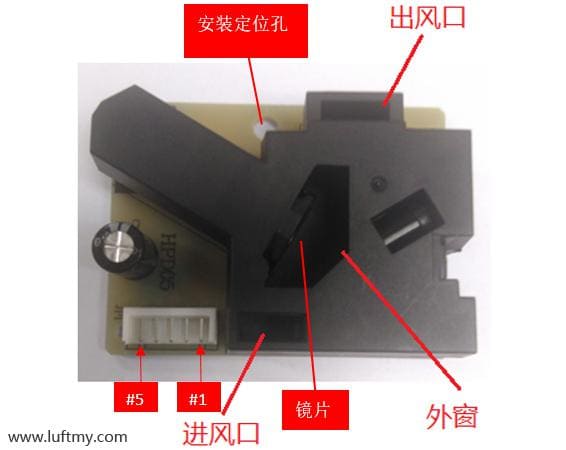
Particulate concentration sensor PM2.5 Infrared sensor HPD05 product image:
The Infrared LED emits light that is reflected by dust particles. A highly sensitive photoelectric receiving sensor detects the intensity of the reflected light and outputs a signal. Based on the signal intensity and quantity, the dust concentration is determined. The output current of the detector is proportional to the detected light intensity. The sensor output current is amplified by an amplifier and then processed and calibrated by a processor, finally outputting a digital PWM signal pulse or through the IIC data interface outputting the dust concentration value.