

Technical Support:
158-7527-1139

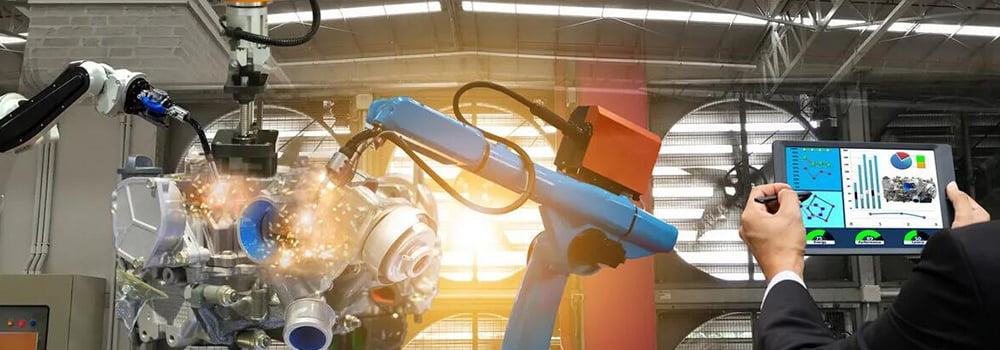
In industrial production, temperature and humidity are important parameters related to production quality and employee comfort. Choosing the right temperature and humidity sensor is the key to ensuring a stable production environment. This article will analyze the types of temperature and humidity sensors commonly used in industry and how to intelligently choose the right sensor.
What kind of temperature and humidity sensors are used in industry?
In industrial production, different scenarios require different types of temperature and humidity sensors. The main types include:
● Resistive: Measures temperature and humidity based on changes in resistance value, suitable for environments requiring relatively low precision.
● Capacitive: Uses capacitance changes to sense humidity and temperature, featuring high precision and fast response, suitable for precision production environments.
● Infrared: Obtains temperature by measuring the infrared radiation emitted by objects, suitable for high-temperature scenes or scenarios where direct contact is impossible.
● Ultrasonic: Utilizes the fact that the propagation speed of ultrasonic waves is related to humidity, suitable for environments requiring long-distance measurement.

How to choose the right temperature and humidity sensor?
● Environmental Requirements: Choose the sensor type according to the actual working environment, considering temperature range, humidity range, and special environmental requirements.
● Accuracy Requirements: Different industrial scenarios have different accuracy requirements for temperature and humidity. Sensors should be selected based on actual needs to determine the accuracy level.
● Response Speed: Some industrial scenarios require sensors to have a fast response speed, especially in rapidly changing environments.
● Environmental Resistance: Considering the specificity of the industrial production environment, choose sensors with characteristics such as corrosion resistance, dustproofing, and waterproofing.
Choosing the right temperature and humidity sensor is an important part of industrial intelligence development. The use of smart sensors not only improves work efficiency but also helps prevent equipment failure and ensures production quality. In the Industry 4.0 era, choosing advanced and intelligent temperature and humidity sensors will be a key link in enhancing corporate competitiveness.
