Technical Support:
158-7527-1139


An all-in-one sensor refers to a sensor that can simultaneously measure multiple physical quantities. Compared to single-function sensors, all-in-one sensors offer advantages such as small size, low cost, and low power consumption. They are widely used in fields like the Internet of Things (IoT), smart homes, and industrial control.
Application Scenarios for All-in-one Sensors:
The application scenarios for all-in-one sensors are very extensive, mainly including the following aspects:
● Smart Home: All-in-one sensors can be used in smart homes for air quality monitoring, temperature and humidity control, human motion sensing, and other applications. For example, all-in-one sensors commonly used in air purifiers can detect PM2.5, formaldehyde, VOCs, and other pollutants simultaneously, providing users with more comprehensive air quality monitoring.
● Industrial Control: All-in-one sensors can be used in industrial control for measuring parameters such as temperature, pressure, and flow. For instance, during the production process, all-in-one sensors can monitor the operational status of production equipment in real-time, providing data support for fault warning and maintenance.
● Healthcare: All-in-one sensors can be used in healthcare for measuring physiological parameters such as heart rate, blood pressure, and blood glucose. For example, in wearable devices, all-in-one sensors can provide users with real-time health monitoring.
● Transportation: All-in-one sensors can be used for data collection such as traffic flow and vehicle location in transportation. For example, in intelligent transportation systems, all-in-one sensors can provide data support for traffic management.
● Other Fields: All-in-one sensors can also be applied in agriculture, environmental monitoring, security, and other fields.
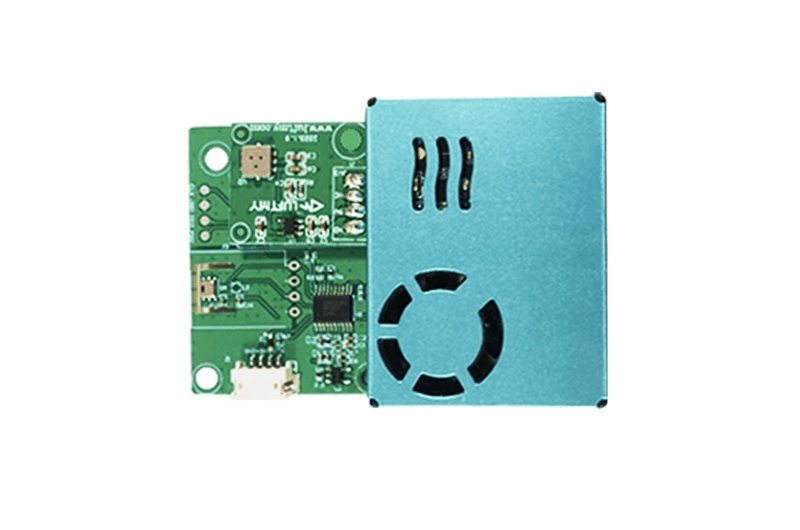
Advantages of All-in-one Sensors:
All-in-one sensors have several advantages:
● Small Size: All-in-one sensors integrate multiple sensors into a single package, which can effectively reduce the size of the sensors.
● Low Cost: All-in-one sensors can reduce the overall cost of sensing.
● Low Power Consumption: All-in-one sensors can lower the power consumption of the device.
Challenges of All-in-one Sensors:
All-in-one sensors also face some challenges, such as:
● Measurement Accuracy: The measurement accuracy of an all-in-one sensor may be influenced by the interaction of multiple sensor components.
● Reliability: The reliability of an all-in-one sensor may be affected by the performance of various individual sensors.
All-in-one sensors provide benefits like compact size, low cost, and low power usage, leading to their extensive application in IoT, smart homes, and industrial control. With continuous technological advancement, the measurement accuracy and reliability of all-in-one sensors will be further improved, leading to adoption in even more fields.