Technical Support:
158-7527-1139

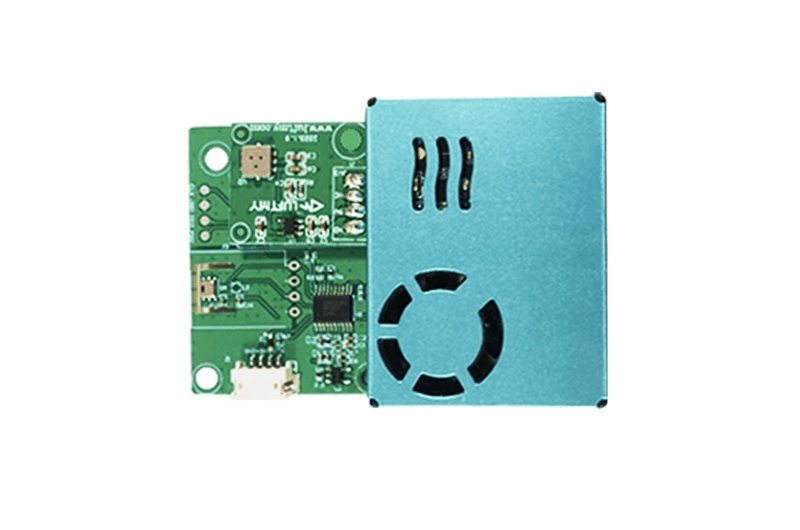
In an era of rapidly developing modern technology, the continuous advancement of various sensor technologies provides us with more monitoring and measurement options. An all-in-one sensor is a powerful tool that can simultaneously monitor multiple environmental parameters, such as temperature, humidity, atmospheric pressure, and light. This article will explore how to choose an all-in-one sensor that fits your needs, as well as its potential uses in different applications.
Determine Application Requirements
First, you need to clarify your application requirements. Different applications may require monitoring different environmental parameters. For example, an agricultural application might need to monitor soil moisture, temperature, and light, while a weather station might need to monitor temperature, humidity, pressure, and wind speed. Therefore, defining your application requirements is the first step in selecting an all-in-one sensor.
Consider Precision and Accuracy
The precision and accuracy of an all-in-one sensor are crucial for many applications. Different sensors may have different precision levels, so you need to choose an appropriate level based on the application's needs. High-precision sensors are usually more expensive, but for certain critical applications, such as weather forecasting or scientific research, accuracy is paramount.
Consider Environmental Factors
All-in-one sensors are often used in outdoor environments, so the durability and adaptability of the sensor must be considered. Understanding factors such as the sensor's operating temperature range, waterproof performance, and shock resistance is key to choosing the right sensor. If your application needs to work under extreme conditions, such as extreme cold or high heat, choosing a sensor with good environmental adaptability is vital.
Consider Communication and Data Interfaces
All-in-one sensors typically generate large amounts of data, so you need to consider how to transmit that data to your system. Sensors usually offer different data interface options, such as analog output, digital output, or data transmission via communication protocols (e.g., UART, I2C, SPI, etc.). It is important to choose a data interface compatible with your system to ensure smooth data transmission and processing.
Understand Power Requirements
All-in-one sensors generally require a power supply to operate, so you need to understand their power requirements. Some sensors can work at low voltages, while others may require higher voltages. Ensure your power system can meet the sensor's power needs, or consider using battery-powered sensors for increased flexibility and mobility.
Consider Cost and Budget
Last but not least, you need to consider cost and budget factors. The prices of all-in-one sensors vary greatly between different brands and models, so choose an appropriate sensor based on your budget. At the same time, consider the lifespan and maintenance costs of the sensor to ensure long-term feasibility.
Seek Professional Advice
If you are unsure how to choose an all-in-one sensor that suits your needs, it is recommended to seek professional advice. Communicating with sensor manufacturers or field experts can help you understand the characteristics and applicability of different sensors so that you can make an informed choice.
An all-in-one sensor is a powerful tool that can meet the needs of various applications. Choosing the right all-in-one sensor requires considering multiple factors such as application requirements, precision, durability, communication interface, power requirements, cost, and budget. By carefully considering these factors, you can choose the all-in-one sensor suitable for your application and fully leverage its monitoring and measurement capabilities to improve work efficiency and data quality.