Technical Support:
158-7527-1139

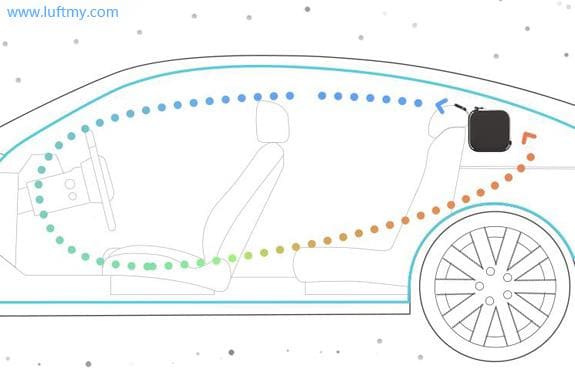
Whenever a new term for pollution emerges, relevant experts and scholars will analyze it in detail, from its origin and development to how it affects human health, and then provide a series of protective suggestions. For instance, from the initially popularized smog to the gradually recognized PM2.5, PM10, to indoor pollution sources like formaldehyde pollution.
In order to cater to the market, various gas sensor manufacturers have begun to seize this opportunity, and various boosters have emerged as the times require. For example, when staying outdoors, we need to wear protective masks with functions such as automatic filtering and ventilation; when staying in a car, there is a built-in internal circulation ventilation cleaning system or a car air purifier; when staying indoors, there are multi-functional air purifiers or fresh air machines.
Luftmy editors have summarized some knowledge about automotive PM2.5 sensors for in-car air purification and improving in-car air quality. First, it should be mentioned that the main sources of car odors are:
Musty smell: This may be caused by bacteria produced in the evaporator and air ducts because the car air conditioning system has not been cleaned for a long time; the odor is brought by bacterial mold.
Gasoline smell: Aging of the gasoline purification carbon canister rubber pipeline; leakage at the gasoline pipe interface, requiring tightening/repair; poor sealing performance after disassembling the gasoline pump. Overfilling the car tank may also cause a strong gasoline smell inside the car.
When opening the door of a new car, you will smell a strong odor of plastic and rubber. In extreme cases, sitting in the car for a long time may cause passengers to vomit or faint. This mainly comes from the interior, including the dashboard, doors, seats, and a series of plastic and leather-wrapped parts. Plastic parts produced just a few months ago have a faint smell, which is determined by their chemical stability.
In addition, for wrapped parts, the plastic frame and the leather are bonded by glue. The glue itself contains a series of irritating odors such as benzene compounds and hyaluronic acid, and this smell is consistent with the odor of new cars. After exposure to the sun, these items will emit harmful substances such as formaldehyde and benzene, affecting human health.
Therefore, many car owners currently install car air purifiers. Although air purifiers can effectively remove odors from the air, since pollutants in the air are invisible, PM2.5 sensors are usually installed to better detect toxic and harmful substances in the air.