

Technical Support:
158-7527-1139

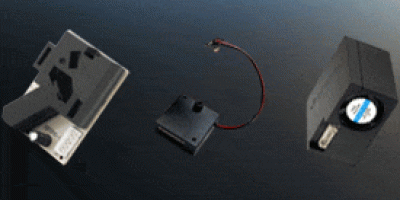
LD10 Laser Dust Sensor: With rapid urban development, vehicles and smog pollution are increasing, making air purifiers a standard home appliance. Regular cleaning is crucial to extend the lifespan of the purifier and improve its effectiveness.
In 2015, Chai Jing's documentary "Under the Dome" sparked wide discussion on smog. As the film concludes: "History is made this way... by millions of ordinary people saying no, I'm not satisfied, I won't wait." As a media professional, she stood up; as an entrepreneur, you can too.

Sources of smog generally include automobile exhaust, waste gas from burning materials, industrial emissions, road dust, etc. It may cause respiratory diseases, cardiovascular diseases, and bacterial infections.
Persistent smoggy weather and crowded respiratory departments in major hospitals have made people truly realize the danger of air pollution. Data shows that smog is mainly composed of sulfur dioxide, nitrogen oxides, and inhalable particulate matter. The first two are gaseous pollutants, while the latter is the culprit that worsens smog. The English abbreviation for particulate matter is PM, and PM2.5 is the most harmful to the human body.

Guangzhou Environmental Protection Bureau released the latest research on the chemical composition and main source changes of atmospheric fine particles (PM2.5). The results show that Guangzhou's PM2.5 last year was "cleaner" than in previous years, with a reduction in chemical content.
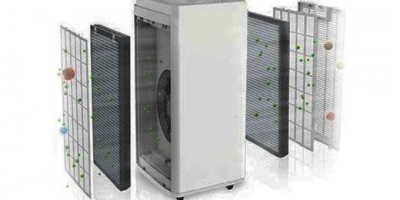
PM2.5 particles from exhaust and industrial emissions harm health. This led to the rise of air purifiers equipped with sensors to monitor air quality.
For a PM2.5 detector, the sensor is the foundation; the quality of the sensor determines the quality and effectiveness of the finished detector. As the "eyes" of the detector, the sensor can quickly detect and react to air quality and provide timely feedback to the user.
What is PM2.5? It has an easy-to-understand name: fine particulate matter. it has a major impact on air quality and visibility. PM2.5 refers to particulate pollutants with a diameter of 2.5 microns or less—about 1/20th the thickness of a human hair. It can enter the human alveoli directly, pass through the alveolar walls into the capillaries, and thus enter the entire blood circulation system. PM2.5 carries a large number of bacteria and viruses, which can cause significant harm to the human body.
With the summer vacation approaching, small weekends are perfect for taking children on road trips and enjoying family time. Many car owners share the same worry: sometimes the air inside the car feels stuffy, mixed with the smell of seats, leather covers, and exhaust. Moreover, the engine produces TVOC while driving, and dust particles (PM2.5) from window cracks and leaked exhaust can pose hazards to passengers.
In recent years, haze weather has had a negative impact on people's lives and health, making research into particulate matter detection technology urgent. The core technology is designing accurate and reliable dust concentration sensors. Compared to domestic efforts, foreign research started earlier with more mature technology, and sensors are widely used in military, aerospace, industrial control, and detection. PM2.5 detection methods include gravimetric, TEOM, beta-ray attenuation, and light scattering. These sensors are often complex, expensive, and heavily influenced by external factors.
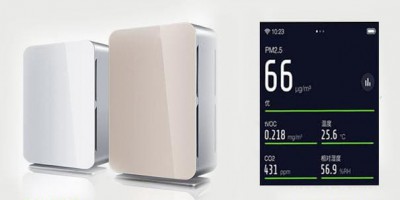
The harm caused by smog, dust, and industrial waste gas is ubiquitous, and indoor air quality issues are becoming increasingly serious, making monitoring and improvement essential. In recent years, reports of deteriorating air quality have increased, leading to heightened public concern, especially in densely populated first- and second-tier cities. Some even hope for air detection functions on phones to monitor surrounding air in real-time. Air purifiers are common in our lives, and more people are using purification equipment. Sensors used in air purifiers include PM2.5 dust sensors, formaldehyde sensors, CO2 sensors, etc.
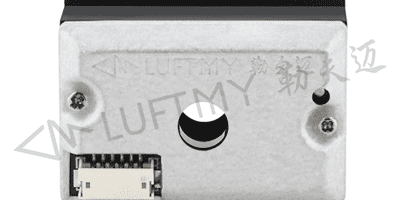
With the continuous expansion of robot application fields, industrial robots, primary intelligent robots, intelligent agricultural robots, home intelligent robots, and advanced intelligent robots have been developed one after another. Multi-sensor information fusion technology is a very important and popular technology among them. There are many types of sensors used in robots, which can be divided into two main categories according to their different purposes: internal measurement sensors and external measurement sensors. Internal sensors are used to detect the internal state of robot components, generally detecting position and angle, while external sensors primarily detect the robot's environment and status, including vision, touch, force, etc. Multi-sensor information fusion refers to the integration of multiple sensors to obtain comprehensive, accurate, and reliable information. Generally, a robot includes the following 10 basic types of sensors.
