

Technical Support:
158-7527-1139

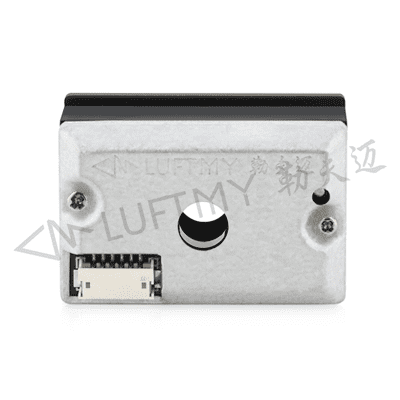
With the continuous expansion of robot application fields, industrial robots, basic intelligent robots, intelligent agricultural robots, home intelligent robots, and advanced intelligent robots have been developed successively. Among them, multi-sensor information fusion technology is a very important and popular technology.
There are many types of sensors used in robots. According to different purposes, they can be divided into two main categories: internal measurement sensors and external measurement sensors. Internal measurement sensors are used to detect the internal status of the robot's components, generally detecting position and angle. External sensors primarily detect the environment and status in which the robot is located, including vision, touch, force, etc. Multi-sensor information fusion refers to the integration of multiple sensors to obtain comprehensive, accurate, and reliable information. Generally, a robot includes the following 10 basic sensors.
1. 2D Vision Sensors
A 2D vision sensor is equivalent to a camera, and its function is to detect object motion patterns and positioning.
2. 3D Vision Sensors
3D vision sensors can detect and identify objects of 3D models. However, 3D vision must use two cameras to shoot from different angles to obtain a more intuitive display of the object.
3. Piezoelectric Sensors
Piezoelectric sensors mainly measure data such as force, pressure, and acceleration. Piezoelectric acceleration sensors are a common type of accelerometer and are also applied in areas such as impact measurement.
4. Infrared Sensors
Infrared sensors are equivalent to infrared detectors, mainly utilizing the radiant thermal effect. The detection element receives radiation which causes a temperature rise, thereby changing the performance parameters in the detector.
5. Force Torque Sensors
The function of the force torque sensor is to detect the force data acting on the robot arm. Based on data analysis, it guides the corresponding behavioral actions of the robot.
6. Safety Sensors
Safety sensors represent a crucial field in industry. Their function is to allow the robot to detect objects around itself and avoid collisions.
7. Collision Detection Sensors
Collision detection sensors have a function similar to safety sensors; their role is to pause or stop the current movement when the robot hits an object.
8. Electromagnetic Sensors
Electromagnetic sensors can detect low-speed motion and feature resistance to environmental impacts and noise. An operating electromagnetic sensor uses a pair of detection units to implement differential detection and reverse differential detection.
9. Fiber Optic Sensors
Fiber optic sensors are mainly used for measurement tasks of various physical quantities such as electric fields, pressure, temperature, and acceleration, featuring strong anti-interference and anti-voltage capabilities.
10. Bionic Sensors
Bionic sensors utilize immobilized cells, enzymes, or other biologically active substances to form the sensor. Their efficacy is used for biological simulation sensing.
