

Technical Support:
158-7527-1139

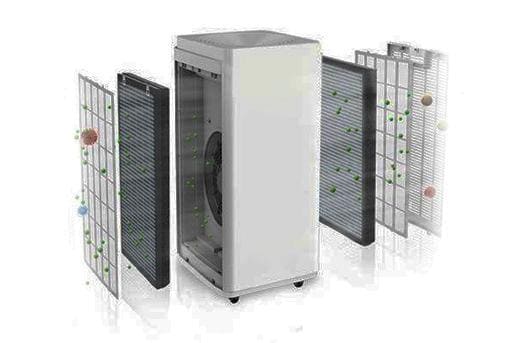
In the atmospheric environment on which human survival depends, oxygen is indispensable, but harmful particulate matter such as PM2.5 is also present. They originate from vehicle exhaust, industrial emissions, garbage incineration, etc., and accumulate over time to imperceptibly erode human health, causing physical discomfort at best and malignant diseases such as cancer at worst. In recent years, as "haze weather" continuously appears, air pollution has seriously endangered our health. Consequently, air purification products have hit the market with high sales, the most typical being the air purifier.
In many cases, the human eye and nose alone cannot identify the presence and content of various particles in the air. However, with technological progress, sensors have endowed humans with unprecedented capabilities. Especially with the rampancy of haze and the enhancement of Chinese people's environmental awareness, air purifiers containing PM2.5 dust sensors have a vast market.
But there are many categories of air purifiers, classified differently according to properties, simply divided into physical purification and chemical purification. Physical purification involves adsorption, such as HEPA filters and activated carbon adsorption. Chemical purification involves decomposition, mainly targeting harmful gases. The technical principle is high-energy particle oxidation. Of course, the sensors for their front-end signal collection and detection are basically the same. Luftmy tells you that generally, air quality sensors and PM2.5 dust sensors are used.
The progress of sensor technology is closely related to people's understanding of air quality and the evolution of the needs of the times. In the smart home field, people pursue a quality life, and one requirement is a certain level of comfort in using various smart home products. Humanized detail design is an embodiment of a smart home brand's pursuit of excellence and concern for customers. Current air purifiers on the market generally have three types of sensors: temperature and humidity sensors, dust sensors, and odor sensors.
Currently, regardless of the manufacturer, it is difficult to measure indoor air quality very accurately. On one hand, there is the precision issue of the air quality sensor itself; on the other hand, due to air fluidity and uneven distribution of pollutants, it is difficult to satisfy the measurement of PM2.5 and TVOC values in a certain space with a single sensor.
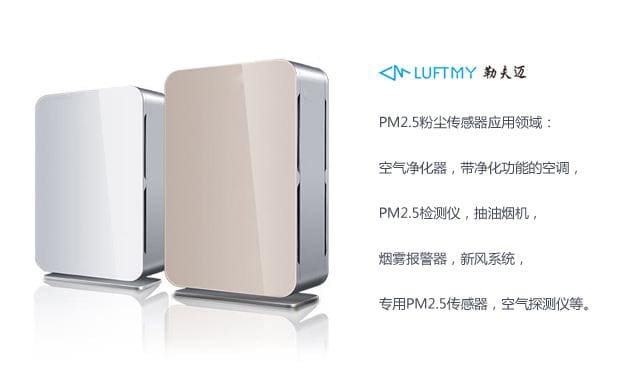
Luftmy PM2.5 sensor application fields: air purifiers, air conditioners with purification functions, PM2.5 detectors, range hoods, smoke alarms, fresh air systems, dedicated PM2.5 sensors, air detectors, etc.
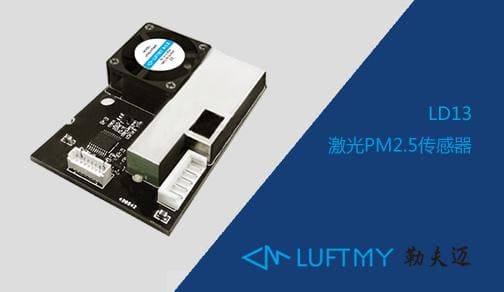
The LD13 laser PM2.5 dust sensor is a high-precision particulate matter concentration sensor based on the Laser Mie Scattering theory. It can continuously collect and calculate the number of suspended particles of different sizes per unit volume of air, i.e., the particulate matter concentration distribution, which is then converted into mass concentration and output via a universal digital interface. This sensor can be embedded in various instruments or environment improvement equipment related to suspended particulate matter concentration in the air to provide timely and accurate concentration data.
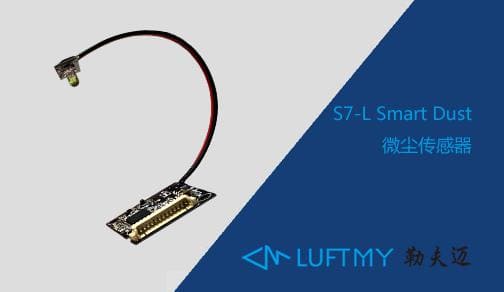
Luftmy micro-dust sensor application fields: vacuum cleaners, sweeping robots, mite removers, smart trash cans, smart detectors, etc.
The S7-L Smart Dust product utilizes the optical opposed-beam principle to accurately detect the number and concentration data of particles passing through the ventilation ducts of devices such as vacuum cleaner handles or extension tubes, sweeping robots, range hoods, and particle detection instruments.
