

Technical Support:
158-7527-1139


In the field of Air Quality Monitoring, the role of PM2.5 Sensors is crucial, as they help us identify and quantify fine particulate matter in the air. PM2.5 Sensors are mainly based on two technologies: Infrared Principle and Laser Principle. Although both sensors are used to detect fine particles in the air, they differ significantly in working principles, detection efficiency, and application scenarios. This article aims to deeply explore the specific differences between Infrared Principle PM2.5 Sensors and Laser Principle PM2.5 Sensors.
I. Infrared Principle PM2.5 Sensor
Infrared Principle PM2.5 Sensors detect PM2.5 in the air by measuring the absorption or scattering of infrared light by particulate matter. This sensor includes an infrared light source and a photoelectric detector. When an air sample passes through the sensor, suspended particles scatter and absorb the infrared light. This change is captured by the detector and converted into an electrical signal to measure the concentration of particles.
Features of Infrared Sensors:
● Cost-effectiveness: Compared to laser sensors, infrared sensors usually have a lower cost.
● Durability: Infrared sensors are relatively stable and have strong anti-interference capabilities.
● Applicability: Better suited for industrial applications in harsher environments.
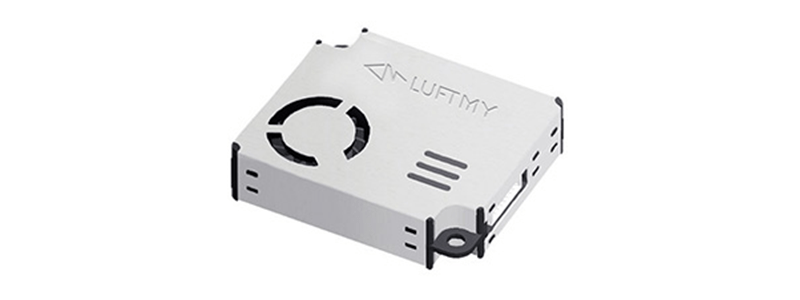
II. Laser Principle PM2.5 Sensor
Laser Principle PM2.5 Sensors use a laser light source to illuminate an air sample and analyze the scattering of laser light by particulate matter to determine the particle concentration. This sensor features high precision and sensitivity, allowing for the accurate detection of very tiny particles.
Features of Laser Sensors:
● High Precision: Laser sensors are more precise in detecting tiny particles.
● Fast Response: Capable of real-time monitoring of air quality changes.
● Wide Application: Suitable for various indoor and outdoor environments, especially for occasions with high requirements for Air Quality Monitoring.
III. Comparison of the Two Sensors
Detection Principle: Infrared sensors rely on the absorption and scattering of infrared light, while laser sensors utilize the scattering characteristics of laser light.
● Precision and Sensitivity: Laser sensors typically offer higher precision and sensitivity than infrared sensors and can detect smaller particles.
● Cost and Maintenance: Infrared sensors have an advantage in terms of cost and maintenance, especially suitable for environments that are cost-sensitive or difficult to maintain.
● Application Areas: Infrared sensors are commonly used for Air Quality Monitoring in industrial and harsh environments, while laser sensors are more frequently applied in indoor and outdoor environments requiring high-precision monitoring.
When choosing a PM2.5 Sensor, it is necessary to decide based on actual application needs and environmental conditions. If in an industrial environment or with a limited budget, an infrared sensor is a suitable choice. Conversely, if high-precision Air Quality Monitoring is required, especially in indoor environments, a laser sensor will be the better choice. Understanding the characteristics and differences of these two sensors can help us more effectively monitor and manage air quality, protecting our health and the environment.
