Technical Support:
158-7527-1139

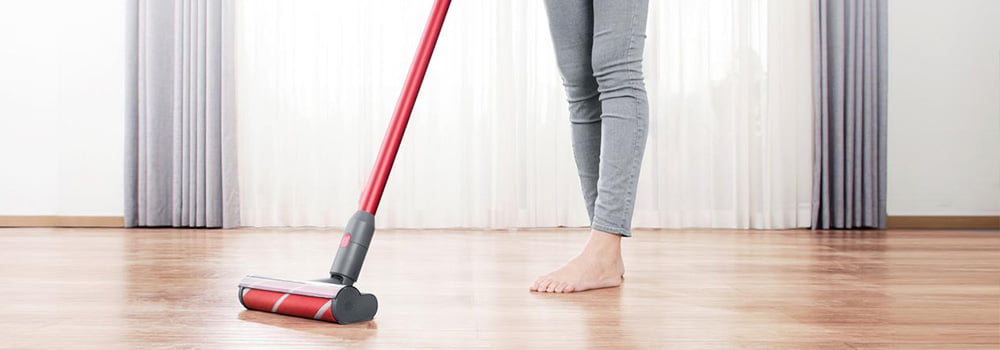
With the advancement of technology, wireless vacuum cleaners are becoming increasingly popular. The advantages of wireless vacuum cleaners include portability, easy operation, and excellent cleaning results. However, some users report that their wireless vacuum cleaners fail to perform stain identification during cleaning. What is the cause of this, and how can it be resolved?
What are the reasons for failed stain identification?
The main reasons why a wireless vacuum cleaner cannot identify stains include:
● Sensor Failure: The sensor is a critical component for stain identification in wireless vacuum cleaners. If the sensor malfunctions, it will lead to failed stain identification.
● Dust Clogging: If the sensor is clogged with dust, it will also affect the accuracy of stain identification.
● Environmental Factors: If the light is too dim or the ambient temperature is too high, it will also affect the effectiveness of stain identification.
How to solve the problem of vacuum cleaner not identifying stains?
If stain identification fails due to a sensor failure, you can contact the manufacturer for repair or replacement. If it is caused by dust clogging, you can open the vacuum cleaner to clean the sensor. If environmental factors are the cause, you can adjust the lighting or ambient temperature.
How to choose a wireless vacuum cleaner?
To avoid situations where stain identification fails, you can pay attention to the following points when selecting a wireless vacuum cleaner:
● Choose a vacuum cleaner with stain identification capability: This function helps the vacuum cleaner accurately detect stains, thereby improving cleaning results.
● Choose a vacuum cleaner with high sensor performance: The better the sensor performance, the higher the accuracy of stain identification.
● Clean the vacuum cleaner regularly: Regular cleaning can prevent dust from clogging the sensor.
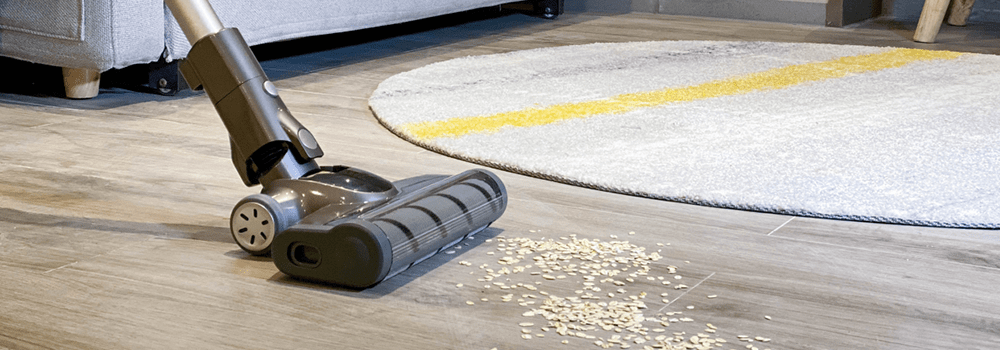
Science Corner: What types of sensors are in vacuum cleaners?
Commonly used sensors in vacuum cleaners include:
● Photoelectric Sensors: These use light scattering principles to detect dust concentration. When dust passes through, it causes light to scatter, changing the output signal.
● Capacitive Sensors: These detect dust concentration through changes in capacitance as dust particles pass through the sensor.
● Ultrasonic Sensors: These utilize ultrasonic reflection principles to detect dust levels; particles passing through alter the reflected ultrasonic waves.
Different sensors have their own pros and cons. Photoelectric sensors are low cost but less accurate. Capacitive sensors offer high accuracy at a higher cost. Ultrasonic sensors are highly accurate but have stricter environmental requirements.
In summary, failed stain identification in wireless vacuum cleaners is mainly caused by sensor failure, dust clogging, or environmental factors. Users can resolve this by inspecting/cleaning the sensor or adjusting the environment. When choosing a wireless vacuum cleaner, prioritize models with reliable stain identification and high-performance sensors to ensure optimal performance.