Technical Support:
158-7527-1139

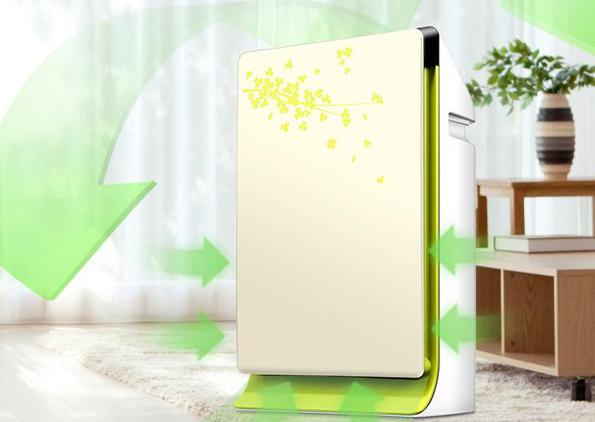
Smart homes are increasingly entering ordinary households. With the progress and innovation of smart homes, there will be more and more air purifier products equipped with micro-dust identification sensors, dust sensors, and PM2.5 detection sensors. These realize linkage effects with indoor equipment such as windows, allowing windows to open or close at suitable times to better serve consumers.
In traditional home security solutions, sensors play an important role as monitors. They help the monitoring host detect whether the threshold set by the user is triggered; once the conditions are met, a series of linkage operations can be realized. Luftmy editor has learned that many smart sensors have been added to smart home products, which likewise help users detect multiple needs, such as dust sensors, temperature and humidity sensors, harmful gas sensors, air quality sensors, laser particle sensors, and so on.
In recent years, among many sensor applications, the use of dust sensors (PM2.5 sensors) has become increasingly common. Especially against the backdrop of more haze threats in China, many consumers choose to buy smart air purifiers with built-in PM2.5 detection modules to optimize their air quality. Thus, the application of dust sensors has been highly prominent in the last two years.
However, we all know that merely detecting air quality is useless; finding problems and solving them is what users need. Luftmy editor knows that many citizens choose to buy air purifiers to solve indoor air issues, but relying solely on the purifier's own detector might not be enough. After all, the device only detects the air quality around itself. If the room is large, air conditions may be uneven. Therefore, dust sensors can be placed in other locations in the room to trigger the air purifier to turn on or off when needed, making the device's function more intelligent.
Currently, smart home devices provide limited services to users, but they can generate linkages through dust sensors to help smart homes provide intelligent services to consumers.