

Technical Support:
158-7527-1139

As a "rising star" in the field of air purification, the fresh air system, which ensures fresh indoor air through air replacement and filtration, is increasingly popular among people. A fresh air system equipped with a dust identification sensor not only possesses relatively leading PM2.5 filtration capabilities but also offers cost-effectiveness suitable for general promotion, meeting the needs of residential buildings such as ordinary apartments, large households, commercial buildings, kindergartens, school classrooms, hospitals, and workplaces.
Macro-Environmental Analysis of Fresh Air Systems
1. Environmental Deterioration: Haze outbreaks are frequent, and the PM2.5 issue in most cities is a severe test. With industrial emissions and vehicle exhaust, China's overall air quality remains challenging.
2. Economic Drivers: Rising living standards mean people no longer worry about basic survival; more people are focusing on health issues, and economic growth is driving purchasing power.
3. Rise of the Real Estate Market: The contradiction between high demands for indoor air quality and the standards achievable in new housing has provided fertile ground for the fresh air industry.
4. Indoor Pollution: The frequency of reports on indoor decoration pollution is rising significantly, with the elderly and children being the groups most at risk.
5. Introduction of National Policies: Recently, relevant departments have successively issued industry regulations targeting indoor air pollution, setting clear standards for indoor air quality in new residences. These suggest vigorous promotion of fresh air systems to deeply instill the concept of healthy indoor air.
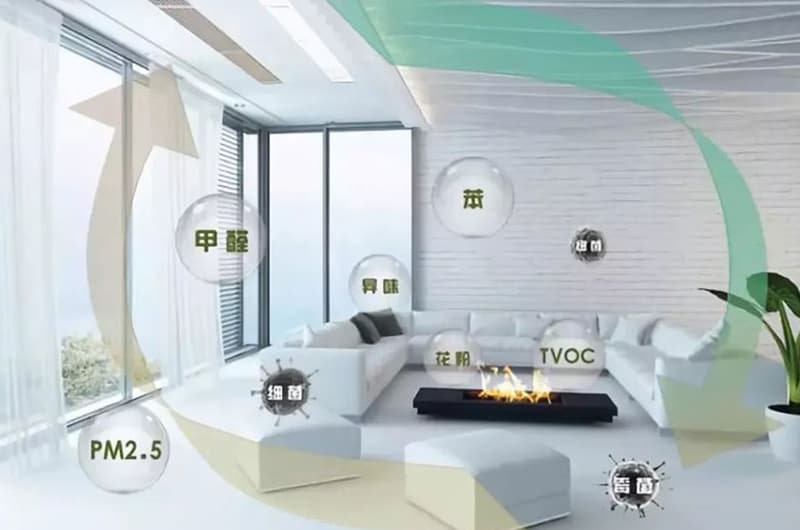
"Rigid Demand" Market Analysis
There are four essential conditions for sustaining life: sunlight, air, water, and food. Without air, you can only survive for 3 minutes. In China, the number of deaths caused by excessive formaldehyde from decoration pollution has reached 111,000, with about 304 people losing their lives every day—roughly equivalent to the daily death toll from traffic accidents nationwide. According to statistics, the cause of death for over 1 million children under the age of 5 nationwide is directly related to moving into newly renovated houses.
60% of residences cannot achieve effective descriptive ventilation for various reasons;
70% of miscarriages are related to indoor air pollution;
80% of families do not dare to move into new homes immediately because of excessive harmful substances like formaldehyde;
90% of children with leukemia had luxury renovations in their homes; 2.1 million children die annually from luxury renovations;
The annual death toll caused by indoor air pollution is as high as 111,000...
In fact, regardless of the specific demand, the fresh air system is an inevitable product of social progress.
The current situation of fresh air systems in China: Greatly increased potential with an unsettled landscape.
User Surveys
User 1: Rongrong's Mother
Mothers in the community group were discussing whether to "upgrade" their home air purifiers. This was the first time Rongrong's mother heard of a fresh air system. After gaining some basic knowledge, she finally decided to switch. Accustomed to online shopping, she searched for product info but felt overwhelmed. "Hundreds of brands, tens of thousands of products. Prices range from over 2,000 to over 20,000 yuan—all over the place. I don't understand the working principles, and the feature descriptions seem unreliable: removing haze in 5 minutes, 99.99% formaldehyde removal, 1 unit of electricity for 12 days... I'm completely lost; I really don't know how to choose."
User 2: Qiqi's Father
"I have a science background, but I still don't know how to choose a fresh air system." When Qiqi's father bought one, he faced similar confusion. His solution was to look for brand recognition online, focusing on established brands with good reputations. Generally, they use electrostatic dust removal and HEPA filtration, so he checked their operation history and after-sales service.
User 3: Feifei's Father
Feifei's father believes that "expensive always makes sense." Since he doesn't understand the principles, he just picks the expensive one...
P.S.: The voices of these three users reflect the public's current understanding of fresh air systems. Most customers are "laymen." Clearly, it will take a long time for the fresh air system to move from being poorly understood to being widely accepted.
Enterprises in the Air Purification Industry
In fact, it's not just consumers who are apprehensive; industry insiders developing air purification systems also feel the market is chaotic. Other white goods markets have stabilized; customers buying air conditioners or TVs usually don't care about operating principles and go straight for big names. But buyers of purification systems aren't so lucky. There are currently no national mandatory standards or mandatory inspections, so consumers really do have to educate themselves.
Fresh air system data
Actually, regardless of the current state, the overall performance of the industry in the air purification market is satisfying. According to data from AVC, preliminary statistics show the Chinese fresh air system market reached 6 billion yuan in 2016, and is expected to reach 9 billion in 2017, an increase of nearly 50%. The future market for fresh air systems is immeasurable.
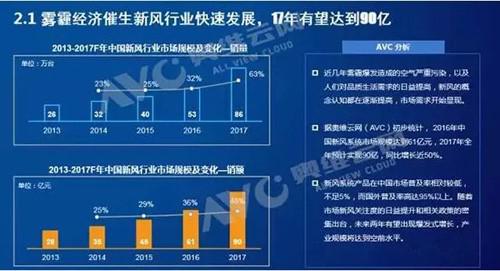
Overall, the fresh air purification industry is a major hotspot in the current Chinese market. Considering sales growth, market penetration, consumer awareness, market prices, profit margins, and risk levels, the industry is in a growth phase. Opportunities and challenges coexist; standardizing laws and regulations is needed to guide development. Besides product standards, this includes building energy-saving standards. The European market developed because regulations for building energy efficiency are extremely strong, making fresh air systems mandatory for new builds. If China follows suit, the prospects will be even greater.
