

Technical Support:
158-7527-1139

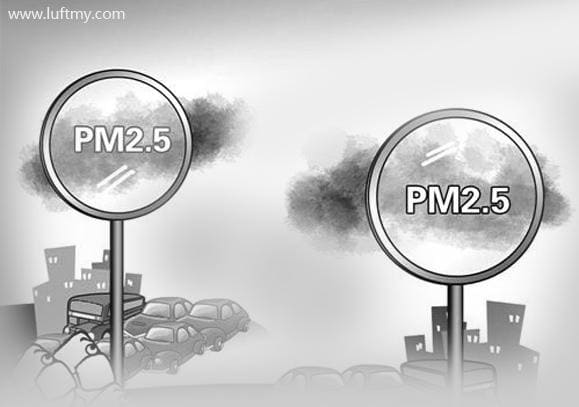
With the improvement of living standards, we pay more and more attention to air quality. PM2.5 particles are very harmful to the human body and are attracting more attention. Dust particles enter the body through the respiratory system and directly affect the lungs; furthermore, small particles can even enter the bloodstream and other organs. The average person breathes about 10,000 liters of air per day. Once the air contains pollutants, human health is bound to be harmed.
PM2.5 fine particulate matter refers to particles in the ambient air with an aerodynamic equivalent diameter of 2.5 microns or less. They can be suspended in the air for a long time, and the higher the concentration, the more serious the air pollution. Although PM2.5 is only a small part of the Earth's atmospheric components, it has a significant impact on air quality and visibility. Compared with coarser atmospheric particles, PM2.5 has a small particle size, large surface area, and strong activity, making it easy to attach to toxic and harmful substances such as heavy metals and microorganisms.
Luftmy editors have noted that relevant meteorologists and medical experts believe that haze weather caused by fine particles is more harmful to human health than sandstorms. Particles with a size of 10 microns or larger will be blocked outside the human nose; particles between 2.5 and 10 microns can enter the upper respiratory tract, but some can be discharged through phlegm or blocked by nasal villi, making them relatively less harmful. Fine particles with a size less than 2.5 microns are equivalent to one-tenth of a human hair and are not easily blocked. When inhaled, they go directly into the bronchi, interfere with gas exchange in the lungs, and cause diseases including asthma, bronchitis, and cardiovascular diseases.
In order to prevent people from inhaling too many harmful particles, it is necessary to monitor particulate matter such as PM2.5 in the air. This requires PM2.5 sensors, also known as dust sensors, particulate matter sensors, etc. PM2.5 sensors can be used to detect the dust concentration in the air around us, which is the PM2.5 value.
