

Technical Support:
158-7527-1139

Cooking oil fumes are formed by the oxidation, cracking, and hydrolysis of edible oils and food. When edible oil is heated to 270-280°C, the collected condensate contains hundreds of compounds. In terms of state, oil fumes consist of three phases: gas, liquid, and solid. The particle size of the liquid-solid phase particulate matter is generally less than 10 microns, with strong adhesiveness; most pollutants are insoluble in water and have low polarity. Oil fume pollutants are mainly divided into two forms: one is particulate matter, commonly known as PM10, PM2.5, and TSP (Total Suspended Particulates); the other is gaseous pollutants, which are complex in composition and typically represented by Volatile Organic Compounds (VOCs).
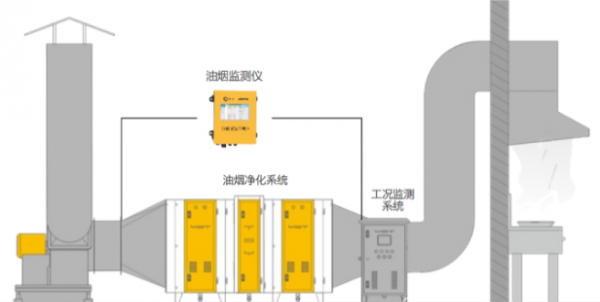
Oil fumes pose significant hazards to the human body, irritating visual organs and causing respiratory diseases such as pharyngitis, tracheitis, and bronchitis, thereby increasing morbidity and mortality rates. Therefore, oil fume control should be implemented alongside air quality monitoring to repeatedly observe control effects over time. For oil fume control, an oil fume detector can be used. An oil fume detector is a device used to detect and monitor the concentration of oil fumes in the air. Utilizing professional sensor technology, it can perform 24-hour continuous measurement of oil fume concentration, particulate matter concentration, and Non-Methane Hydrocarbon (NMHC) concentration in kitchen exhaust pipes. It completes the entire process from on-site detection and data processing to analysis display and record transmission. By monitoring oil fume concentrations promptly, necessary control measures can be taken to improve indoor air quality and reduce the health impact of oil fumes.
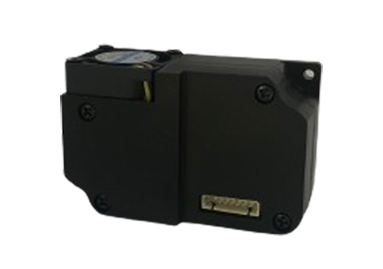
To avoid pollution damage to the environment and human health, kitchen air quality needs to be monitored. For kitchen air quality monitoring equipment, we recommend the PM2.5 particulate matter concentration sensor - LD19. The LD19 is a digital general-purpose particulate matter concentration sensor based on the principle of laser scattering. It can continuously collect and calculate the number of suspended particles of different sizes per unit volume of air (i.e., particulate matter concentration distribution), convert them into mass concentration, and output data via a digital interface. This sensor can be embedded in various instruments or environment improvement equipment related to suspended particulate matter concentration to provide timely and accurate data.
