Technical Support:
158-7527-1139

Undoubtedly, automobiles are one of the essential necessities for modern travel. With the vigorous development of 5G and intelligent connected vehicles, the world has entered the era of the Internet of Everything, where intelligent vehicles and autonomous driving are rapidly becoming the symbols of a new travel era. Consequently, the performance of intelligent vehicles must be continuously enhanced and optimized. This relies on the rapid advancement of automotive electronic technology, with MEMS automotive sensors being the most representative core components.
Due to their increasingly mature technology, MEMS automotive sensors can meet the requirements of harsh automotive environments, high reliability, accurate precision, and low cost. This has greatly promoted the application of electronic technology in vehicles. Driven by market guidance, technological advancement, venture capital, and government involvement, they have developed rapidly and become a hotspot for investment and development.
An intelligent vehicle uses as many as 25-50 MEMS sensors of various types. Common MEMS automotive sensors include:
Currently, five types of devices—pressure sensors, accelerometers, flow sensors, gyroscopes, and temperature/humidity sensors—account for more than 99% of automotive MEMS systems.
MEMS Pressure Sensors
MEMS pressure sensors are among the most used sensors in automobiles. At least 18 automotive application areas drive their growth, including tire pressure (TPMS), brake sensors in Electronic Stability Control (ESC) systems, side airbags, engine control related to increasingly strict emission standards, atmospheric pressure, and Exhaust Gas Recirculation (EGR) pressure.

These sensors use monocrystalline silicon as the material. MEMS technology is used to create a force-sensitive diaphragm in the center of the material. Impurities are then diffused onto the diaphragm to form four strain resistors, which are connected in a Wheatstone bridge circuit to achieve high sensitivity. Common types of automotive MEMS pressure sensors include capacitive, piezoresistive, differential transformer, and surface acoustic wave (SAW) types.
MEMS Accelerometers
The principle of MEMS accelerometers is based on Newton's classical laws of mechanics. They usually consist of a suspension system and a proof mass. Acceleration is detected through the displacement of the micro-silicon mass block. They are mainly used in automotive airbag systems, anti-slip systems, car navigation, and anti-theft systems. In addition to capacitive and piezoresistive types, MEMS accelerometers also come in piezoelectric, tunneling current, resonant, and thermocouple forms.
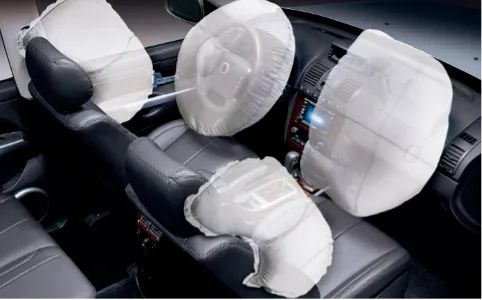
Among them, capacitive MEMS accelerometers are the mainstream products due to their high sensitivity and minimal impact from temperature changes.
MEMS Flow Sensors
MEMS flow sensors are based on the traditional thermal film anemometer principle, using advanced thin-film technology to process stable thin-film resistors onto a single film. MEMS processing shortens the sensor response time and, through the use of front and rear bridge circuits, allows for the determination of fluid direction, enabling further measurement of backflow.

To prevent temperature changes from affecting measurement accuracy, two thermistors are used for temperature compensation of the front and rear bridges. Flow sensors are primarily used to detect engine air intake and fuel injection volume to control the air-fuel ratio near the optimal value. They are also widely used in EGR, traction control, ABS, and electronically controlled suspension.
Micro-gyroscopes
Micro-gyroscopes are angular rate sensors mainly used for GPS signal compensation in car navigation and chassis control systems. They primarily include vibratory and rotor types. The most common is the vibratory gyroscope, which uses the Coriolis effect generated when a vibrating mass of monocrystalline or polycrystalline silicon rotates with the base to sense angular velocity.
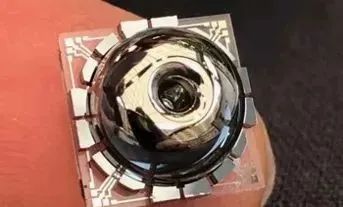
For example, when a car turns, the system uses the gyroscope to measure angular velocity to indicate whether the steering wheel rotation is sufficient, actively applying appropriate braking to the inner or outer wheels to prevent the car from leaving the lane. It usually forms an active control system together with low-G accelerometers.
MEMS Humidity Sensors
The pandemic has accelerated R&D and innovation in healthy vehicles and cabins. Automakers are launching intelligent air purification systems and using eco-friendly materials and epidemic prevention technologies to develop "healthy cabins," equipped with PM2.5 sensors, temperature/humidity sensors, formaldehyde sensors, CO/CO2 sensors, and AQS air quality sensors.

MEMS Sensors Empowering Intelligent Vehicles
It is evident that with the continuous development of AI and Vehicle-to-Everything (V2X) technology, MEMS sensors will play an even more vital role in intelligent vehicles.
For instance, MEMS oil pressure sensors play a crucial role in engine systems by controlling the engine's operating state. Since engine oil contains organic substances and metal debris from mechanical wear, the oil pressure sensor must be resistant to corrosive media and contamination, ensuring that oil pressure remains stable after startup. If an abnormality is found, an alarm signal is issued through the instrument cluster.
Source: Automotive Electronics Academy
Disclaimer: This article is reprinted for the purpose of conveying more information. If there are any sourcing errors or infringement of your legal rights, please contact us for correction or deletion. Thank you.