

Technical Support:
158-7527-1139


Mine laser methane sensors use spectral absorption to measure concentration. They are accurate and suitable for explosive coal mine environments.
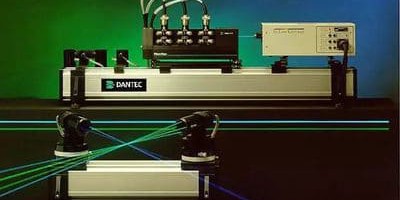
The Doppler effect explains changes in frequency as sources move closer or further away. This principle is applied in laser sensing systems.
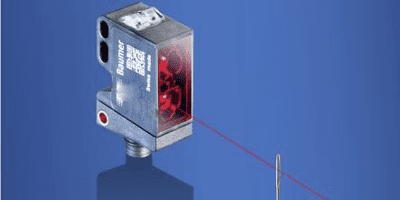
Small laser sensors based on IO-Link can measure micro particles. IO-Link is a manufacturer-independent digital interface that allows consistent communication with the sensor level and cost-effective wiring.
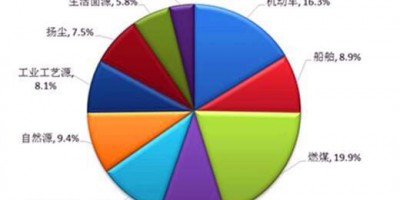
To clarify the chemical composition and main sources of fine particulate matter (PM2.5) in the city and implement targeted governance, the Municipal Environmental Protection Bureau has completed the 2016 PM2.5 source apportionment research following previous years' efforts. The results have passed expert review.

Many industrial processes require dust-free environments. In film production, dust can cause emulsion oxidation. This article explores dust sensor solutions in semiconductor cleanrooms.
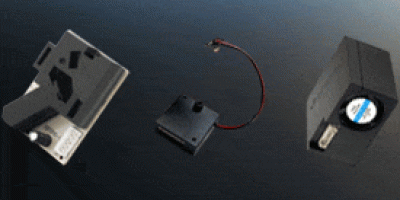
Internet of Things (IoT) uses sensors, RFID, and GPS to collect data (light, heat, chemical, etc.) for intelligent management of objects and processes.
Smart Dust refers to ultra-miniature sensors with computing functions that can detect environmental parameters and communicate wirelessly. Used in military, health, and environmental monitoring.
Infrared and laser technologies are used in both high-end tech and daily life. Most smartphones have infrared functions, and many household products use these two technologies.
Since winter began, indoor air has become dry, and many use humidifiers. However, improper use of household humidifiers can lead to health issues. Let's explore some science-based tips for using humidifiers.

PM refers to particulate matter. PM2.5 is a term for fine particulate matter with a diameter of 2.5 micrometers or less. Sources are either man-made or natural.
Many might think PM2.5 is haze or that haze is caused by PM2.5. Let's clarify some basics first. What is haze (Wu-Mai)? Literally, it is fog (Wu) and haze (Mai), but they are very different. Fog is a natural phenomenon where micro water droplets suspend near the ground due to temperature drops. Haze consists of extremely fine dry dust particles floating in the air, making visibility less than 10 kilometers and creating a murky appearance. It is mainly composed of sulfur dioxide, nitrogen oxides, and inhalable particulate matter.
The Lambert-Beer law, also known as Beer's law, describes the relationship between the intensity of light absorption by a substance at a certain wavelength and the concentration of the absorbing substance and the thickness of the liquid layer.
