

Technical Support:
158-7527-1139

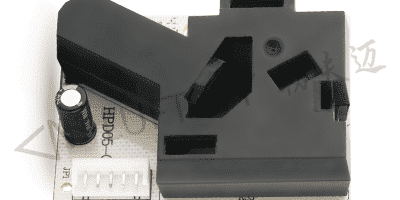
Indoor air quality monitors can detect formaldehyde, toluene, xylene, ammonia, TVOC, and other pollutants. The built-in infrared dust sensor module uses an infrared LED; when light hits dust, it reflects, and the intensity of this reflection reflects the dust concentration, which is then output to the screen.
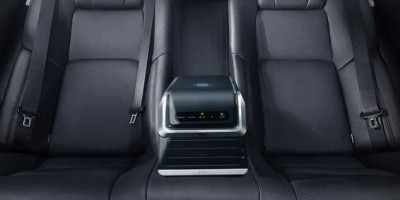
With economic growth and increased health awareness, creating a good breathing environment is a major goal. Car air purifiers are a new category that improves the closed environment of car interiors and has been well-received by the market.
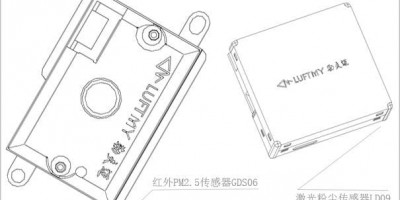
Both PM2.5 laser sensors and infrared dust sensors are photoelectric sensors used to detect dust concentrations in the air. However, their internal structures differ significantly, leading to differences in measurement accuracy. Let’s compare their internal structures.

Ordinary ventilation fans are controlled by switches. With the rise of smart homes, many smart fans now use sensors to monitor air quality, allowing the fan to "decide" for itself whether to operate.
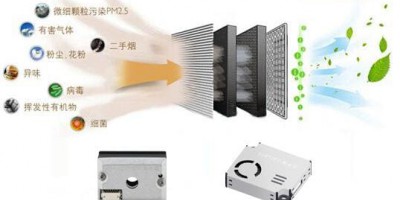
The domestic air purifier market has been heating up, with many new products appearing. Internet companies have found success with high cost-performance ratios, while large corporations dominate with big data and cloud computing. For smart features in air purifiers, the PM2.5 sensor is essential.
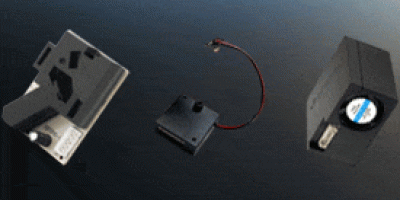
PM2.5 sensors, also called dust sensors, detect the concentration of dust in the surrounding air. In aerodynamics, dust with a diameter less than 10μm that can enter the alveolar region is called respirable dust. Particles larger than 10μm are mostly deposited in the nasopharynx, while those under 10μm can enter the deep respiratory tract. Most dust deposited in alveoli is under 5μm.
Although environmental awareness and quality have improved, haze still occurs in many first- and second-tier cities. If you have children and cannot move to a better environment, you should understand the findings summarized by LUFTMY and actively improve your indoor air, which is highly beneficial for a child’s growth.
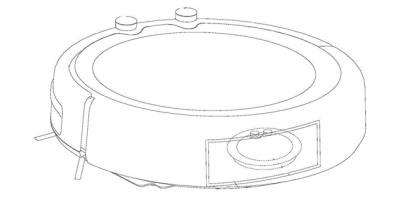
Sweeping robots are entering more homes and are no longer just fancy toys. However, many buyers are dazzled by the performance data provided by merchants. Therefore, LUFTMY provides some suggestions for reference.
Ventilating ACs differ from traditional ACs by removing foul air and adjusting humidity. The KFR-35GW model uses the GDS06 sensor to identify particulate concentration and initiate ventilation functions based on pollution levels.
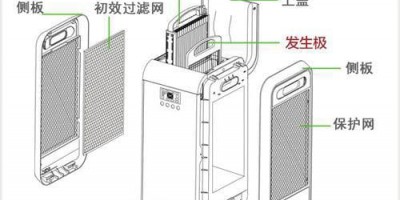
The EPI260 purifier features the Luftmy HPD05 sensor to detect PM2.5 and release negative ions for fresh air. Its filter removes particles down to 0.3 microns (PM0.3), while activated carbon adsorbs formaldehyde, benzene, VOCs, and odors.
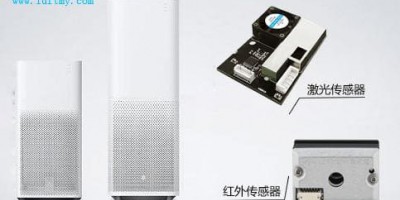
Compared to built-in PM2.5 sensors, many people are more familiar with standalone "smog meters." Despite purifiers having built-in sensors, many users still choose external meters to monitor indoor air quality.
PM2.5 refers to dust particles with an aerodynamic diameter ≤2.5μm. They suspend in air for long periods and harm health when inhaled. Higher PM2.5 concentrations mean more severe air pollution.
