

Technical Support:
158-7527-1139

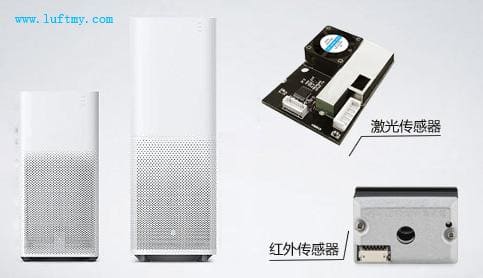
Compared to the PM2.5 sensors equipped in air purifiers, most people might be more familiar with the common “haze meter.” With the increasing severity of air pollution, the market share of air purifiers is not inferior to that of most purifiers, which also shows users' concern for the air quality around them. However, have you ever thought about this: why do many people still choose a haze meter to monitor indoor air quality while the purifier itself is equipped with a sensor?
This involves a serious defect in the design of the built-in sensor on the purifier body: limited by its working principle, it can only monitor a small portion of the air around the purifier body. Such a design cannot objectively reflect the purification performance of the purifier.
For a simple example, the single purification efficiency of an air purifier may perform well, but an unreasonable structural design leads to poor air delivery effects, and clean air cannot circulate effectively. This means that most of the time, only the air around the purifier body is clean, yet users cannot discover this problem through the monitoring data. This cannot be blamed on the sensor——after all, the particulate matter content in the air passing through it at that moment is indeed not high.
To address this serious defect, the Luftmy editor compared the mainstream purification products currently on the market and found a relatively more reliable solution: adopting a split-design independent air quality sensor. The sensor can be connected to the purifier via Bluetooth or WiFi to act as both a sensor and a controller; it can also be used as an independent “haze meter.”
While enjoying clean indoor air every day, you might not notice the inconspicuous particulate matter sensor on the body (some high-end models also have gaseous pollutant sensors), but their role is bigger than you imagine. However, I also want to remind everyone that the particulate matter sensor, like the filter and other accessories of the purifier, needs regular cleaning. Simply open the external cover and clean it with a cotton swab; it is quite simple.
