Technical Support:
158-7527-1139

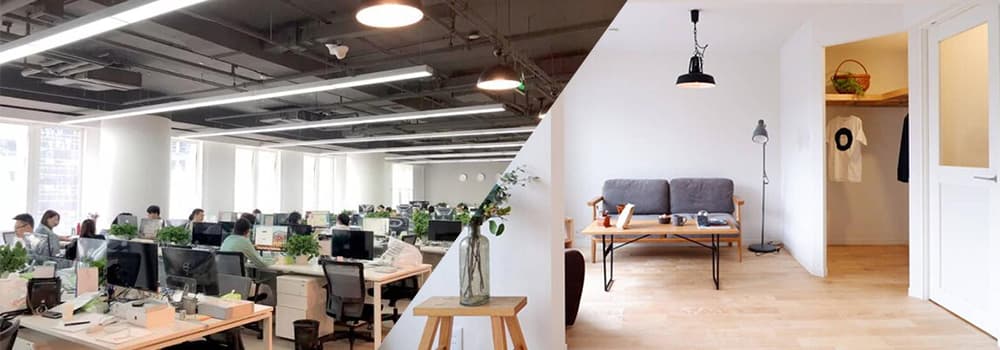
In today's working and living environments, air quality issues in both offices and homes have gained significant attention. Dust sensors, as key devices for monitoring particle concentration in the air, play a vital role in these environments.
So, are office dust sensors and home dust sensors the same?
The answer is no. There are distinct differences between the two, despite both being indoor dust sensors.
But why? Here are the primary reasons for these differences:
● Operating Environment: Offices typically have higher occupancy and faster air circulation, leading to more frequent fluctuations in dust concentration. Home environments have fewer people and slower airflow, resulting in more stable particle levels.
● User Requirements: Offices need to monitor air quality across large areas to implement HVAC-scale improvements. Homes focus on the health of family members, requiring practical data to guide personal health protection.
● Price and Performance: Office dust sensors must meet higher standards for detection accuracy and high-frequency usage, making them more expensive. Home dust sensors are designed for daily routine use and are generally more budget-friendly.
Functionally, office dust sensors often feature higher sensitivity and precision. These may utilize more sophisticated technologies, such as laser scattering, and can be integrated into Building Automation Systems (BAS) to trigger industrial-grade air purifiers or ventilation systems.
In contrast, home dust sensors might use more common technologies like infrared or filter-based sensing. While their absolute precision may be slightly lower than professional office models, they provide sufficient air quality data for residential users to take actions like regular cleaning or turning on a portable air purifier.
In summary, although both environments require dust sensors to monitor air quality, their design and performance targets differ. Office sensors are more specialized and advanced to meet rigorous monitoring standards, while home sensors prioritize practicality and accessibility.