Technical Support:
158-7527-1139

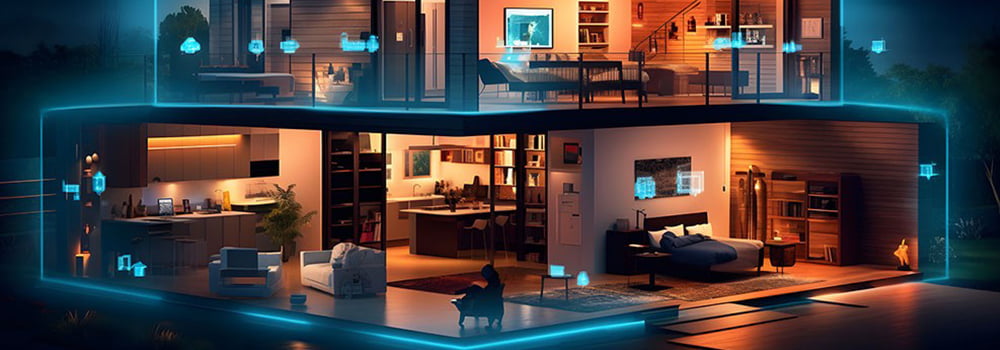
According to forecasts from the China Center for Information Industry Development (CCID), the market size of China's smart home industry will reach 500 billion yuan by 2024, with the user base reaching 250 million households.
The popularity of smart homes makes our daily lives more convenient, not only improving the quality of home life but also bringing a more intelligent lifestyle. Sensors play a critical role in this, as they perceive and collect environmental information, providing the foundational data support for smart home systems. Whether in home security, environmental monitoring, appliance control, or lifestyle convenience, sensors are indispensable.
Moreover, with the continuous advancement of sensor technology, their application in smart homes will become even more extensive, providing users with a more comfortable, convenient, and safe living experience.
The application of sensors in smart homes is very broad and can be applied to various aspects. Here are some typical application scenarios:
Security Monitoring
In security monitoring, sensors can be used to monitor windows, doors, human presence, and smoke. For example, door/window sensors detect if they are open, PIR sensors detect if someone is in the room, and smoke sensors detect fire hazards. These sensors help users detect anomalies promptly and take safety measures.
Environmental Monitoring
For environmental monitoring, sensors monitor indoor temperature, humidity, light, and gas concentrations. For example, temperature and humidity sensors track the indoor climate, light sensors detect illumination levels, and gas sensors check air quality. These help users create a comfortable and healthy living environment.
Appliance Control
In appliance control, sensors can control lighting, air conditioning, and windows. For example, photosensitive sensors automatically switch lights based on brightness, temperature sensors adjust HVAC settings, and occupancy sensors can trigger automated door/window operations.
Lifestyle Convenience
For convenience, sensors enable functions like smart speakers, smart locks, and smart curtains. Voice control, non-inductive entry, and scheduled curtain movements are all powered by these technologies.
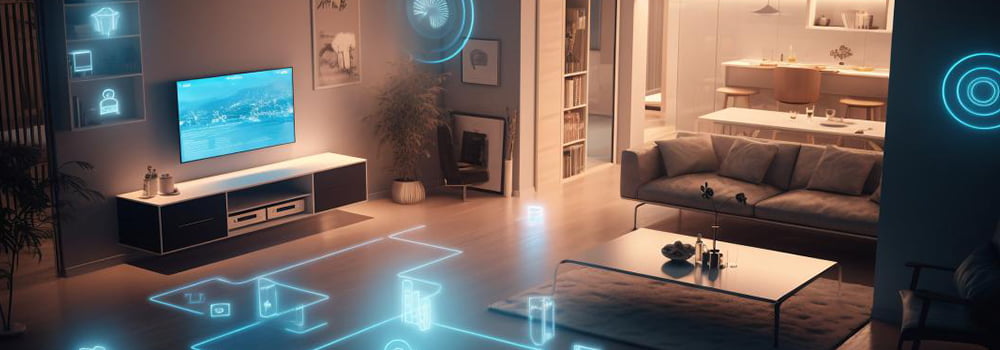
The extensive use of sensor technology in smart homes has already transformed our lifestyles. However, with the continuous advancement of technology, there is still immense room for development.
Sensors have become a key driver for intelligent development. In the future, with the combination of AI and machine learning, sensors will become more adaptive, accurately predicting user needs for a personalized experience.
Furthermore, with the spread of 5G and IoT, interconnection between sensors will be more efficient, leading to higher overall intelligence levels through better data exchange and linkage.
In the smart home industry, sensors will continue to drive innovation, making future homes more intelligent, personalized, and closely aligned with user needs.