

Technical Support:
158-7527-1139

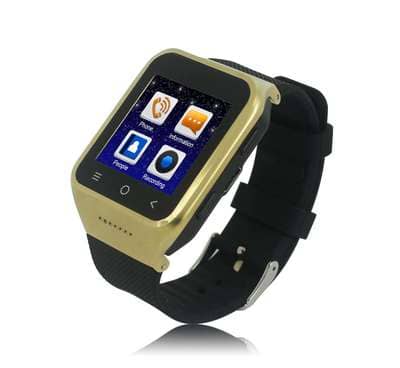
With the development of mobile technology, smartwatches have become increasingly popular. Besides telling time, they offer navigation, reminders, detection, calling, and more. These functions are all completed using various sensors.
Different sensors achieve different functions, such as monitoring heart rate, monitoring sleep, exercise reminders, GPS positioning, and so on. So, what sensors are used in smartwatches?
1. Vital Sign Sensors
Vital sign sensors are used for blood pressure monitoring. The working principle is based on Photoplethysmography (PPG), measuring pulse rate through blood vessel light sampling as vessels expand and contract with blood pulses. They can analyze and synchronize Heart Rate (HRP) and Electrocardiogram (ECG) measurements to calculate blood pressure values.
2. Ambient Light Sensors
Ambient light sensors are used for LED displays to automatically adjust brightness and save battery. They sense surrounding light conditions so the processing chip can adjust the screen brightness and reduce power consumption. These sensors consist of three parts: the light sensor for detecting intensity, the data processor, and the actuator for controlling backlight current.
3. NFC Technology
Smartwatches rely on NFC for payment terminals, subway gates, and other NFC readers. The principle involves generating an RFID card response synchronized with the reader's magnetic field, which improves the reliability and speed of NFC transactions compared to passive load modulation.
4. Temperature and Humidity Sensors
Smartwatches can detect environmental temperature and humidity. Relative humidity and temperature readings from the sensor help improve the accuracy and reliability of physical exercise measurements that are highly dependent on environmental conditions.
