

Technical Support:
158-7527-1139

Air pollution has intensified with the process of industrialization. In recent years, due to large emissions of automobile exhaust, air pollutants have shown an upward trend in large and medium-sized cities, becoming a serious environmental health problem faced by humanity. In addition to its effects on the lungs, PM2.5 affects all systems of the body. This article by the Luftmy editor provides an overview of the impact of PM2.5 on various systemic diseases and the related mechanisms.
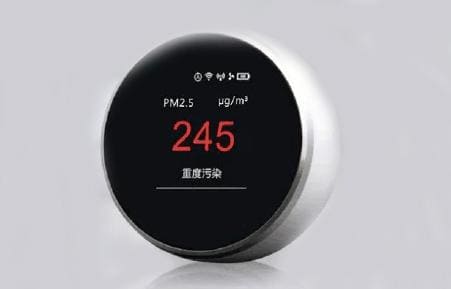
PM2.5 and Respiratory Diseases
①. PM2.5 and Chronic Obstructive Pulmonary Disease (COPD): COPD is characterized by incomplete reversible airflow limitation. This airflow limitation is usually progressive and related to the excessive inflammatory response of the lungs to toxic particles and gases. COPD has become an important public health problem in recent years. Preventing acute exacerbations of COPD (AECOPD) is the top priority in COPD prevention. Recent epidemiological studies suggest that about 30% of the etiology of AECOPD may be related to air pollution.
②. PM2.5 and Bronchial Asthma: Bronchial asthma is a chronic airway inflammation involving multiple cells and cellular components. Studies found that after verifying factors such as weather, temperature, diurnal variations, seasons, and age, there is still a certain correlation between the PM2.5 concentration at the patient's long-term residence and acute asthma attacks. In winter, the concentration of smog (mainly PM2.5) in the atmosphere increases, especially on the day after the increase, which can significantly increase the number of clinic visits due to asthma attacks; PM2.5 also has a good early warning effect on acute asthma attacks. The exact mechanism by which PM2.5 triggers acute asthma attacks is not yet clear, but it is currently believed to be related to PM2.5 penetrating alveolar epithelial cells, entering the blood circulation, and releasing biologically active substances in the blood to promote allergic inflammation.
③. PM2.5 and Lung Cancer: A series of epidemiological investigations have explored the relationship between PM2.5 exposure and the occurrence of lung cancer. Although the results regarding PM2.5 and lung cancer risk vary in these articles, the vast majority confirm the existence of this relationship. The latest research finds that PM2.5 is significantly associated with an increased risk of lung cancer. For every 10μg/m3 increase in PM2.5 concentration, the OR value for lung cancer occurrence is 1.29 (95% CI: 0.95-1.76).
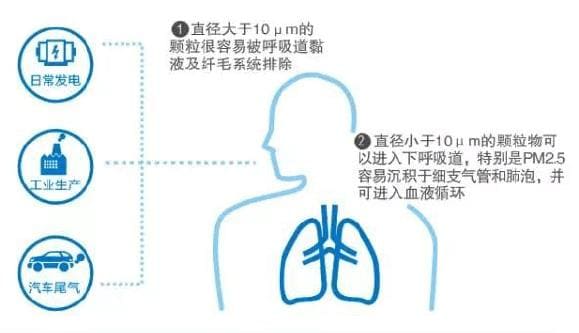
PM2.5 and Cardiovascular Diseases
Epidemiological research results have found that a short-term increase in atmospheric PM2.5 concentration can induce arrhythmia, worsen heart failure, and aggravate ischemic cardiomyopathy and ischemic stroke. Recent meta-analysis results show a positive correlation between PM2.5 exposure and heart rate variability (HRV), indicating a poor prognosis for cardiovascular events. Animal studies show that after mice were exposed to environmental PM2.5, mitochondrial function in heart tissue was damaged, which was significantly related to decreased myocardial contractility. In apolipoprotein E gene knockout mouse models, exposure to PM2.5 can cause vascular inflammation and further aggravate atherosclerosis. PM can also promote vascular calcification by activating the NF-κB inflammatory signaling pathway. In addition, PM particles are considered important factors in stimulating the autonomic nervous system (ANS), affecting autonomic balance, which may lead to cardiovascular risk and susceptibility to arrhythmia through vasoconstriction.

PM2.5 and Digestive System Diseases
Non-alcoholic fatty liver disease (NAFLD) refers to a clinicopathological syndrome characterized by diffuse macrovesicular steatosis of hepatocytes, excluding alcohol and other definite liver-damaging factors. Studies show that the prevalence of NAFLD in Western developed countries is 20% to 33%, so NAFLD requires sufficient attention. A nutrition survey including 4,582 adults showed that serum alanine aminotransferase (ALT) significantly increased after exposure to environmental pollutants (mainly PM2.5). After adjusting for age, race, gender, body mass index, poverty-income ratio, and insulin resistance, ALT still increased significantly. Following PM2.5 dosage, Kupffer cells showed significant proliferation. The activation of Kupffer cells can release a large number of cytokines, which in turn triggers inflammation and collagen synthesis by hepatic stellate cells, eventually leading to liver fibrosis.
In summary, an increase in PM2.5 concentration can cause and aggravate damage to all systems of the body. This damage includes systemic inflammatory responses in the respiratory, circulatory, and digestive systems caused by PM2.5-induced immune allergic reactions and oxidative stress, leading to organ damage. Therefore, personal protection and reducing pollutants are particularly important.
With the development of industry and transportation, PM2.5 pollution will become increasingly serious. Therefore, strengthening population protection and reducing atmospheric particulate matter pollution will become the focus of future work. Based on reducing air pollution, it is very important to use PM2.5 sensors for air pollution prediction and monitoring so that individuals can take protective measures, thereby reducing the occurrence of systemic diseases.

Application areas of Luftmy dust sensors: vacuum cleaners, sweeping robots, mite removers, smart trash cans, smart detectors, etc.
The S7 Smart Dust sensor utilizes the principle of optical transmission and is installed in the ventilation ducts of equipment such as vacuum cleaners and sweeping robots. It accurately measures the number and concentration data of particles such as mites, dust, and hair fibers, and displays the cleanliness data of floors, carpets, bed sheets, sofas, and car interiors in real time.
Application areas of Luftmy PM2.5 sensor application: air purifiers, air conditioners, PM2.5 detectors, range hoods, smoke alarms, fresh air systems, dedicated PM2.5 sensors, air detectors, etc.
The laser PM2.5 dust sensor LD09 is a high-precision particulate matter concentration sensor based on the laser Mie scattering theory. It can continuously collect and calculate the number of suspended particles of different sizes in the air per unit volume, i.e., the particle concentration distribution, and then convert it into mass concentration and output it in the form of a general digital interface. This sensor can be embedded in various instruments or environmental improvement equipment related to the concentration of suspended particulate matter in the air to provide timely and accurate concentration data.
