

Technical Support:
158-7527-1139

In addition to the external air quality we focus on, in fact, with consumption upgrades and the continuous maturity of automobile consumption, the attention to in-car air quality has been increasing day by day. This has also driven attention to automotive-grade laser PM2.5 dust sensors, making them an indispensable part of vehicles.
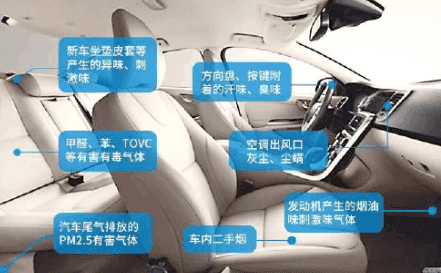
As a result, in-car air quality has gradually become another high ground for automotive competition. As consumers pay more and more attention to in-car air quality, this trend is becoming clearer: Luftmy editor reminds that healthy and good in-car air quality is becoming one of the essential standards for automobiles.
One of the future car competition elements: In-car air comfort:
According to the 2016 China Automotive Industry Customer Satisfaction Survey results jointly organized by the China Automotive Technology and Research Center and China Consumer News: the attention to various indicators of car satisfaction, ranked from high to low, are comfort, safety, driving experience, performance, and appearance/interior design, with coefficients of 2.37, 2.07, 1.98, 1.82, and 1.77 respectively. Among them, attention to comfort rose from second place in 2015 to first place.

Main sources of in-car air pollutants:
Damping plate: An automotive accessory widely used inside cars for heat and sound insulation.
In-car air conditioning: The culprit for excessive inhalable particulate matter in the car.
Plastic products and adhesives: Paints, thinners, and bonding glues used in production.
Interior trim: Such as car floor glue, door inner panels, roof lining, curtains, etc.
Interior accessories: Such as seats, cushions, seat covers, and seat fabrics.
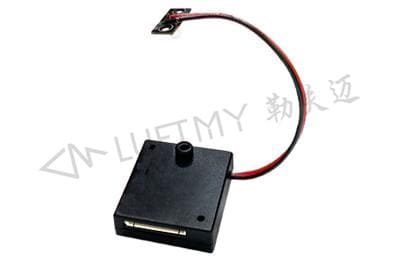
Invisible fine dust, bacteria, volatile gases, and metal particles in the car air are all factors that endanger human health. Car owners have generally begun to care about whether on-board air purifiers and car air conditioning systems can display real-time detection values, and have put forward strong demands for this.
The S7 Smart Dust dust sensor utilizes the principle of optical transmission and is installed in the ventilation ducts of equipment such as vacuum cleaners and sweeping robots. It accurately measures the number and concentration data of particles such as mites, dust, and hair fibers, and displays the cleanliness data of floors, carpets, bed sheets, sofas, and car interiors in real time.
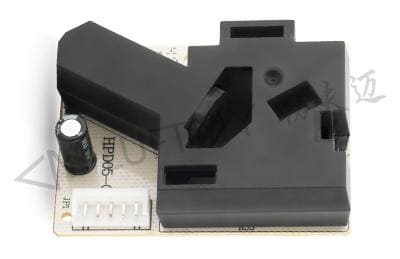
The Luftmy HPD05 infrared PM2.5 sensor module uses the optical scattering principle to detect the concentration of dust in the air. The sensor has a built-in infrared light-emitting diode and a high-sensitivity photoelectric receiver sensor. The infrared light-emitting diode emits light that generates reflected light when it encounters dust. The photoelectric sensor reflects the concentration of dust in the air by detecting the intensity of the reflected light. The sensor directly outputs a PWM signal, where the PWM width is the current concentration value (1ms = 1ug/m3). It can also output the dust concentration value through IIC serial signals, in units of ug/m3. This sensor is suitable for air purifiers, on-board purification equipment, air conditioners with purification functions, fresh air systems, and air quality testing instruments.
The Luftmy LD11 laser dust sensor is a high-precision particulate matter concentration sensor based on the laser Mie scattering theory. It can continuously collect and calculate the number of suspended particles of different sizes in the air per unit volume, i.e., the particle concentration distribution, and then convert it into mass concentration and output it in the form of a general digital interface. This sensor can be embedded in various instruments or environmental improvement equipment related to the concentration of suspended particulate matter in the air to provide timely and accurate concentration data, such as air conditioners, air purifiers, and on-board purification equipment.
