

Technical Support:
158-7527-1139

In modern home life, air purifiers and PM2.5 sensors have become important tools for monitoring and improving indoor air quality. They help us understand the concentration of suspended particulate matter in real-time, which is especially critical at night. However, many people find that while daytime air quality remains at a relatively healthy level, at night—especially in the bedroom—the air purifier seems to go “crazy,” running frequently, while the PM2.5 sensor shows a sudden spike in concentration. This phenomenon is not only confusing but also raises health concerns. What exactly causes PM2.5 to surge in bedrooms at night? And how can we effectively deal with this challenge?
To answer this, we first need to explore the possible causes of PM2.5 concentration spikes. Generally, the rise in PM2.5 levels at night can be attributed to the following aspects:
● Reduced Ventilation: To keep bedrooms warm and comfortable, people often reduce ventilation at night. This prevents fresh outdoor air from effectively replacing stale indoor air, making it difficult for PM2.5 generated by indoor activities to be exhausted.
● Indoor Pollution Sources: Nighttime activities, such as using humidifiers (especially with unfiltered water sources), lighting candles, or using certain types of air fresheners, can all become sources of PM2.5. Additionally, harmful gases released by indoor decoration materials and furniture can lead to higher PM2.5 concentrations in the absence of effective ventilation.
● Infiltration of Outdoor Pollutants: Even with reduced ventilation, outdoor PM2.5 can still seep indoors through gaps in doors and windows, especially in areas with high levels of atmospheric pollution.
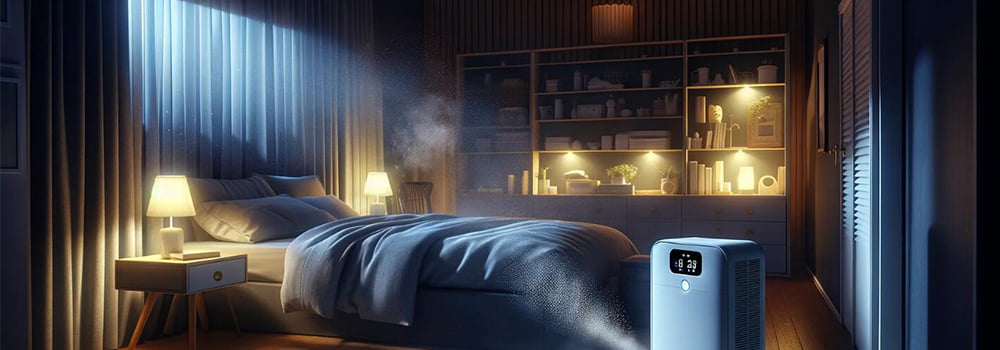
Once we understand the causes of nighttime PM2.5 spikes, we can take a series of measures to address this challenge and protect our health and that of our families:
● Improve Indoor Ventilation: Without compromising sleep quality, appropriately increase nighttime ventilation. Consider opening windows before bed and after waking up in the morning to promote the exchange of indoor and outdoor air.
● Control Indoor Pollution Sources: Minimize activities and products that may generate PM2.5 at night. For example, use humidifiers with purified water, and avoid lighting candles or using chemical air fresheners in the bedroom.
● Use Air Purifiers: Ensure the air purifier operates at night, specifically choosing a model with high-efficiency PM2.5 filtration and placing it in the bedroom. Adjust the air purifier to a mode that ensures effective purification while minimizing noise.
● Monitor Indoor Air Quality: Regularly use PM2.5 sensors to monitor indoor air quality to understand how different activities impact it, and adjust daily behaviors and purification strategies accordingly.
Through these measures, we can not only effectively manage nighttime PM2.5 surges but also create a healthier and more comfortable living environment for our families. In modern urban life, protecting indoor air quality is a vital part of safeguarding our health. With scientific methods and appropriate prevention, we can fully master this challenge and enjoy a healthy, beautiful life.
