

Technical Support:
158-7527-1139

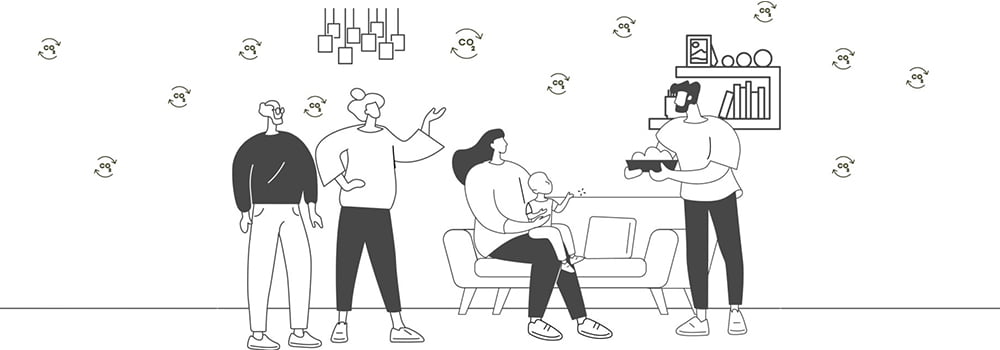
With the improvement of people's quality of life, the attention to indoor air quality is also increasing day by day. Indoor CO2 sensors, as a key technology for assessing air freshness, have been widely used in commercial, residential, and industrial environments. By accurately monitoring the carbon dioxide content in the air, it helps us understand indoor ventilation conditions and make timely adjustments, thereby ensuring the health and comfort of the indoor environment.
I. Working Principle of Indoor CO2 Sensors
The core principle of indoor CO2 sensors is to determine the concentration of carbon dioxide in the air through different detection methods such as electrochemical, infrared, optical, or thermal conductivity.
● Infrared Sensors: It utilizes the absorption characteristics of carbon dioxide molecules for specific wavelengths of infrared light to perform measurements. When infrared light passes through the gas being measured, carbon dioxide molecules absorb specific wavelengths of light, and the carbon dioxide concentration is determined by detecting the change in light intensity after absorption.
● Electrochemical Sensors: These sensors detect carbon dioxide concentration through electrochemical reactions, usually including an electrode that reacts with carbon dioxide, resulting in a change in current that is associated with the gas concentration.
● Optical Sensors: This type of sensor uses a laser or LED light source to determine carbon dioxide content by detecting changes in light intensity, phase, or polarization.
● Thermal Conductivity Sensors: These sensors rely on the principle that different gases have different thermal conductivities, sensing the concentration of carbon dioxide by measuring changes in heat flow.

II. Indoor CO2 Sensor Application Areas
● Home and Public Buildings: In homes and offices, CO2 sensors can monitor the ventilation status in crowded areas and adjust indoor air through integration with fresh air systems.
● Educational Institutions: Educational venues such as schools and libraries ensure the air quality of the learning environment by monitoring CO2 concentrations.
● Healthcare: Medical environments such as operating rooms and wards are urged to use CO2 sensors to monitor air quality, protecting the health of patients and medical staff.
● Industrial Control: In manufacturing and other industrial processes, CO2 sensors can be used to monitor environmental changes in the process to ensure operational safety.
● Agriculture: In greenhouse cultivation, controlling CO2 concentration through CO2 sensors can optimize plant growth conditions and increase yield.
● HVAC Systems: In modern HVAC systems, sensors are used to regulate indoor air quality, ensuring air circulation efficiency and energy saving through real-time data.
CO2 sensors are not only used to monitor and improve indoor air quality but also have positive significance for energy management and environmental protection. With technological progress and the expansion of applications, future indoor CO2 sensors will be more accurate, intelligent, and convenient, providing more protection for our living and working environments.
