

Technical Support:
158-7527-1139

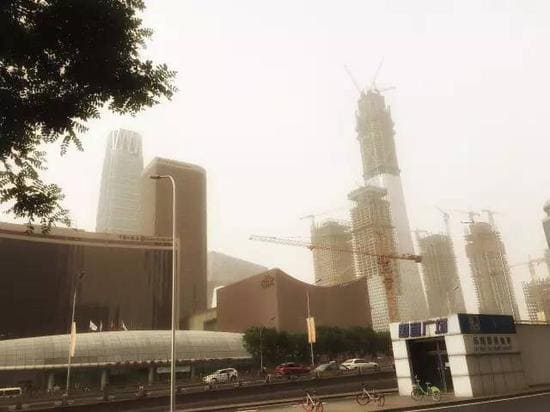
Haze appears repeatedly and lasts for a long time. When we complain about it, have you ever considered how much you would be willing to pay for PM2.5 emission reduction?
Recently, a study published in Ecological Economics by Professor Zhang Xiaobo, Dr. Zhang Xin from Peking University, and Professor Chen Xi from Yale University found that Chinese residents are willing to pay 539 yuan per person per year for a 1 μg/m3 reduction in PM2.5. This amount accounts for 3.8% of the per capita household income in 2014.
China's population-weighted average concentration of PM2.5 in 2014 was 68 μg/m3, which is much higher than the air quality standards published by the U.S. Environmental Protection Agency. In 2013, the Chinese government implemented an important comprehensive policy to manage air pollution, namely the "Air Pollution Prevention and Control Action Plan" (referred to as the "Ten Measures for Atmosphere"). The plan aimed to reduce the concentration of inhalable particulate matter by 10% within five years. The results of this study indicate that during the five-year period, the average person is willing to pay 3,665 yuan to achieve this goal.
The individual data used in the study came from the 2014 "China Family Panel Studies (CFPS)", implemented by the Institute of Social Science Survey of Peking University, covering about 14,000 households in 25 provinces/cities/autonomous regions. Air quality data came from 947 monitoring stations nationwide, including six pollutants: PM2.5, PM10, nitrogen dioxide, sulfur dioxide, carbon monoxide, and ozone. Among them, inhalable particulate matter (PM10 and PM2.5) are the primary pollutants in China and the culprits of haze pollution. PM2.5 is more harmful to health than PM10. PM10 can usually only enter the human upper respiratory tract and can be cleared by mucociliary action. In contrast, tiny PM2.5 can pass through the lungs, directly enter the circulatory system through the alveolar capillaries, and leave toxic substances in the blood, causing permanent damage to the body. Therefore, this study focuses on PM2.5.
The CFPS data contains each respondent's score for their own happiness. Based on the exact time and location of the interview, the study matched the happiness data with air quality data and explored the relationship between happiness, household income, and air pollution. Research shows that household income increases happiness, while air pollution reduces happiness, so there is a balance point between these two factors. Based on this equilibrium relationship, this study estimates how much people are willing to pay for a 1 μg/m3 reduction in PM2.5 concentration while keeping happiness constant.
This valuation method based on happiness data overcomes some shortcomings of traditional valuation methods. For example, a commonly used valuation method is to directly ask respondents about their willingness to pay through questionnaire design. This method is subject to people's strategic answers, the way questions are designed, and the initial monetary value given at the start of the survey, leading to large differences in the valuation range of air quality across different studies.
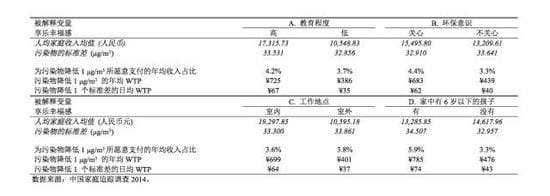
In addition, due to the wide coverage of CFPS data, this study can also estimate the willingness of different groups to pay for PM2.5 reduction. Respondents with higher education, strong environmental awareness, those working outdoors, and those with children under 6 at home are willing to pay a higher proportion of household income for PM2.5 reduction. For example, respondents with children under 6 at home are willing to pay 785 yuan per person per year (5.9% of per capita household income) for a 1 μg/m3 reduction in PM2.5, while those without children under 6 are willing to pay 476 yuan per person per year (3.3% of per capita household income), significantly lower than families with children.
China's "13th Five-Year Plan" (2016-2020) aims to make significant progress in managing air pollution. Specifically, the plan states that air quality in cities at the prefecture level and above must reach excellent or good for 80% of the days each year. This study has important policy implications. Because the formulation of optimal environmental policies depends on the trade-off between costs and benefits, residents' willingness to pay for air quality reflects the value of air quality, thereby providing information on benefits for the formulation of stricter environmental regulations.
