

Technical Support:
158-7527-1139

With the continuous improvement of living standards and the increasing health awareness of the whole people, air quality issues are receiving more and more attention. At the same time, air quality monitoring and air purification products have also gained increasing focus. According to online shopping data in recent years, the demand for air purifiers and other products has been rising, which indirectly has prompted an increasing number of air purifier manufacturers.
However, many manufacturers find it difficult to choose between laser PM2.5 dust sensors and infrared PM2.5 dust sensors. Below, Luftmy editor will introduce some differences between the two from the following four aspects:
1. Comparison of the principle and structure of infrared PM2.5 dust sensors and laser PM2.5 dust sensors
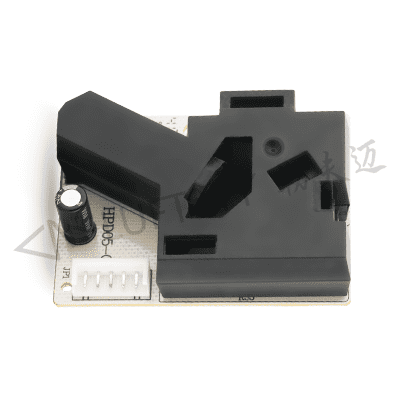
The structure and circuit of the infrared PM2.5 dust sensor are relatively simple. The light source is an infrared LED. According to the principle of light scattering, the LED emits light that encounters dust to produce reflected light. The photosensitive detector detects the light intensity of the reflected light and judges the dust concentration based on the size of the pulse signal. That is, when no dust is detected, the photosensitive detector outputs a low pulse. Conversely, when dust is detected, it outputs a high pulse. The pulse signal is proportional to the detected light intensity. The pulse signal is amplified by an amplifier and calculated by a processor to finally output the detection result. The output signal is generally only a PWM signal.
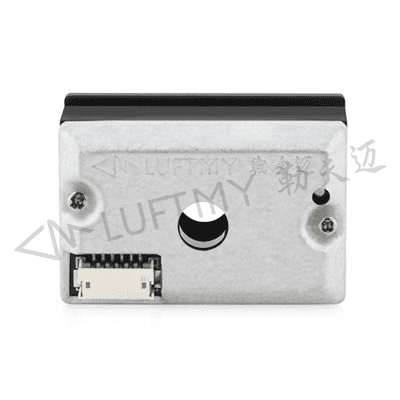
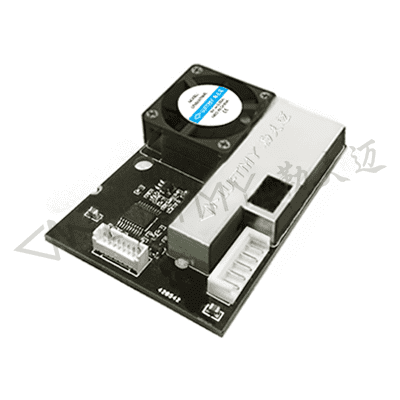
The structure and circuit of the laser PM2.5 dust sensor are relatively complex, and the light source is a laser diode. The light source of the laser sensor is a laser diode, which samples air through the internal negative pressure generated by a fan. When particles in the sampled gas pass through a converged beam such as the light source (laser), light scattering occurs. The scattered light is converted into an electrical signal (pulse) through a photoelectric converter. The larger the particle, the larger the pulse signal (peak value). The number concentration of each particle size can be obtained through the peak value and pulse count at this time. That is, real-time test data is obtained by testing the quantity and intensity of scattered light.
2. Comparison of accuracy measurement between infrared PM2.5 dust sensors and laser PM2.5 dust sensors
In April this year, in an episode of CCTV’s Weekly Quality Report themed “Unclear Haze Meters,” the General Administration of Quality Supervision, Inspection and Quarantine organized risk monitoring of haze meters and tested 30 batches of samples, none of which met the reference standard requirements under the test conditions. Experts said that the design of these haze meters is simple, and the test results indicate that the built-in sensor is just a decoration, without an auxiliary fan or other auxiliary airflow entry devices. Therefore, very little air enters the haze meter, and the accuracy can be imagined.
Laser dust sensors can detect particles above 0.3um, come with a high-performance CPU, and use fans or blowers to collect large amounts of data, which are analyzed through professional particle counting algorithms.
Because the signal of particles scattered by infrared LED light is weak, it only responds to large particles greater than 1um, and it only uses a heating resistor to drive the sampling airflow. The number of samples is small, and data calculation is entirely left to the host computer. Infrared dust sensors can only detect particles above 1um, and the measurement accuracy is relatively insufficient.
3. Comparison of price and cost between infrared PM2.5 dust sensors and laser PM2.5 dust sensors
The market price of infrared dust sensors is around 30 yuan. From a cost perspective, laser dust sensors have added parts such as laser generators and fans, and the circuits are relatively complex, so the cost has increased. However, with the widespread application and technical maturity of laser dust sensors in the past two years, and the fact that laser dust sensors can support the numerical display function, the price no longer has a disadvantage compared to infrared dust sensors; instead, it is a high-cost-performance choice.
4. Industry applications of laser PM2.5 dust sensors
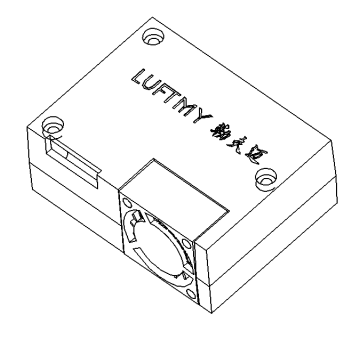
Laser PM2.5 dust sensors are mainly used in air purifiers, air conditioners, PM2.5 detectors, range hoods, smoke alarms, fresh air systems, dedicated PM2.5 sensors, air detectors, wearable devices, etc.
Infrared PM2.5 dust sensors are mainly used in air conditioners, air purifiers, vehicle purification equipment, portable detectors, fresh air systems, smart detectors, etc.
Both infrared PM2.5 dust sensors and laser PM2.5 sensors have their own advantages, so there is no definitive word on which PM2.5 sensor is better; it all depends on the customer’s requirements, such as cost requirements, relevant particulate matter, etc.
Guangzhou Luftmy Intelligent Technology Co., Ltd. sensors are in a leading position in the same industry in several performance indicators such as measurement accuracy, stability, consistency error, and anti-interference. For three consecutive years from 2015 to 2017, Luftmy infrared/laser dust sensors, PM2.5 sensors, micro-dust sensors, particulate matter sensors, air quality sensors, and other gas sensors accounted for more than 35% of the market share in shipments at home and abroad, receiving widespread praise in the industry.
