Technical Support:
158-7527-1139


In modern life, people are increasingly concerned about indoor air quality because good indoor air is vital for health. As a convenient and comprehensive monitoring tool, all-in-one air quality sensors can effectively detect TVOC (volatile organic compounds), which plays an important role in safeguarding indoor environmental quality.

A dust sensor is a device capable of detecting the concentration and size of dust particles in the air. It has the advantages of small size, light weight, low cost, and ease of use, and is widely used in fields such as industry, environmental protection, construction, and medicine. In recent years, with the development of agricultural modernization, dust sensors have gradually been applied in the agricultural field. The application of dust sensors in agriculture has broad prospects and can provide important technical support for agricultural production.

In modern homes, indoor air quality is vital to our health. As a smart technology product, the all-in-one air quality sensor has multiple functions that can effectively help monitor and improve indoor air quality, protecting the health of family members.

The carbon dioxide sensor is an important component in automotive air conditioning control systems, primarily used to measure the CO2 concentration in the car’s air. CO2 is a waste gas produced during human respiration and accumulates in the confined space of a car; excessive CO2 concentration can impact human health and safety.

The fresh air controller is an important part of the fresh air system, responsible for controlling its operating status. During use, fresh air controllers require regular maintenance and care to extend their lifespan and ensure normal operation.
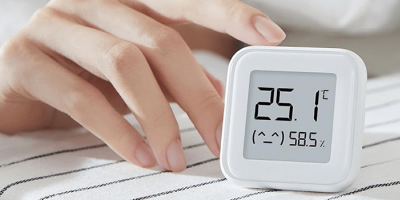
Temperature and humidity sensors play a key role in monitoring environmental temperature and humidity. They are widely used in industrial, agricultural, and medical fields. However, like any other electronic device, temperature and humidity sensors can fail. If a sensor is damaged, it may cause the device to malfunction or produce inaccurate data. Therefore, correctly judging whether a sensor is damaged is very important.

Particulate matter refers to suspended solid or liquid particles in the air with a diameter of less than 100 microns, of which particles with a diameter of less than 2.5 microns are also known as fine particulate matter (PM2.5), which are significantly harmful to human health. A particulate dust sensor is a sensor used to detect the concentration of particulate matter in the air and is widely used in environmental monitoring, industrial production, and health protection.
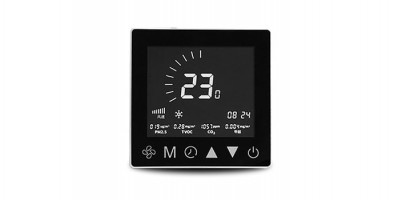
The fresh air control panel is a crucial component of the fresh air system, responsible for controlling the operation of the system and regulating indoor air quality. However, some common problems may occur during use. Let's learn about them together.

The all-in-one sensor is an important innovation in today's technological field. It integrates multiple sensing functions into one device, becoming a vital tool for environmental monitoring and control. The emergence of this technology not only improves the efficiency and functionality of sensors but also brings new opportunities and challenges to the development of various fields.

In this digital age, CO2 sensors have become a key tool for maintaining fresh air in the office. Through CO2 sensors, we can accurately monitor indoor CO2 levels, ensuring that employees work in a good indoor environment. Therefore, today Guangzhou Luftmy will popularize some related knowledge points.

The PM2.5 sensor, a seemingly inconspicuous device, carries a significant responsibility for the environment and health. With accelerated urbanization and industrialization, the monitoring and control of fine particulate matter (PM2.5) in the air have become an urgent priority. Currently, PM2.5 sensors serve as key tools, not just for monitoring microparticle concentrations, but also as a foundation for environmental policy-making, personal health protection, and scientific research. Let's take a deep dive into these compact yet powerful sensors, from their working principles and the pros and cons of different types to their application scenarios and future development trends.

An infrared sensor is a device that uses infrared rays to perceive, receive, and analyze target information. It can detect invisible infrared light and trigger alarms or perform specific tasks based on the heat or radiation emitted by the target. Widely used in security monitoring, temperature measurement, automation systems, etc. Below, let us delve into its working principle, classification, and recent development trends.