

Technical Support:
158-7527-1139

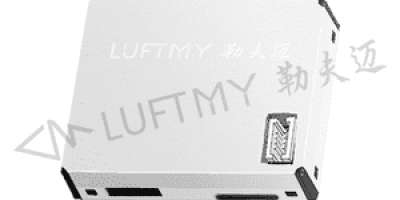
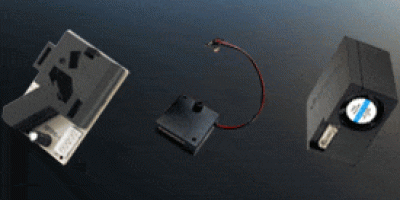
Laser dust sensors focus on collecting and calculating the number of suspended particles of different sizes in the air per unit volume—namely, the particulate matter concentration distribution—which is then converted into mass concentration to provide timely and accurate data. The laser dust sensors developed by Guangzhou Luftmy utilize the Mie spherical particle scattering principle. The sensor uses a laser to irradiate suspended particles in the air to produce light scattering. A photoelectric detector collects the scattered light intensity within a certain angular range, converts it linearly into a voltage, and sends it to a data processing system. The system processes the data according to pre-programmed routines based on Mie scattering theory to determine the equivalent particle size and the number of particles of different sizes per unit volume.
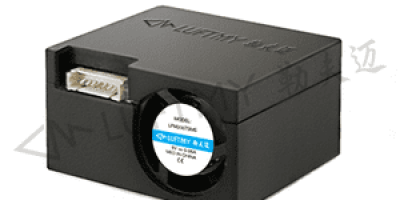
High-precision laser navigation sensors are specifically designed for applications in high-performance gaming, precision graphic design, and high-precision position verification. This type of laser sensor is a high-precision, high-performance navigation sensor that not only possesses high speed and accuracy but also operates at low power. It adopts a simple snap-in lens design, integrating the laser and detector into a compact electronic component package. This simple two-part device features built-in laser eye safety management, eliminating the need for laser power calibration during assembly, thereby reducing production costs. The sensor supports speeds of up to 50 inches per second and a resolution of 2800 cpi, maximizing work efficiency. Additionally, it can respond instantly to changes in tracked position or speed by significantly reducing latency.
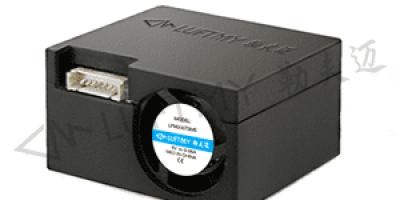
LiDAR sensors use light remote sensing to measure distance. Drone-based systems scan the environment to calculate 3D maps.

Laser weapons use high-energy beams to destroy targets. They are fast and precise but limited by weather and atmospheric conditions.
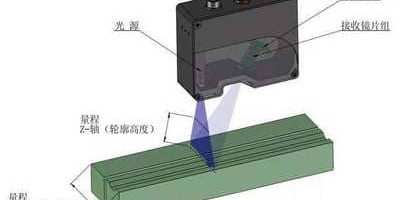
Laser scanning sensors use triangulation to scan 2D profiles and 3D measurements. They are used for protection in dangerous areas and access control.
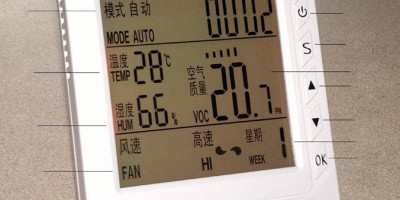
HVAC systems, also known as air conditioning systems, include functions for temperature, humidity, air cleanliness, and air circulation—similar to the principles of standard or central air conditioning. In the past, HVAC systems were manually activated, switched on when needed and off manually; the main issues were a lack of intelligence and low energy efficiency.
Can infrared dust sensors be used in PM2.5 detectors? Generally speaking, infrared dust sensors can be installed in PM2.5 detectors. However, for portable PM2.5 detectors that require fast response and operate in changing environments, laser dust sensors are generally used. For fixed PM2.5 detectors or those that do not move frequently, infrared dust sensors can be used.
Many companies or large homes are now equipped with smart central air conditioning. In addition to regulating indoor temperature, they are also used for ventilation and improving indoor air quality. For central air conditioning to be smart, various types of sensors must be used inside to receive external information, convert it into electrical signals for the system, and then allow the system to process them uniformly.

For a PM2.5 detector, the sensor is the foundation; the quality of the sensor determines the quality and effectiveness of the finished detector. As the "eyes" of the detector, the sensor can quickly detect and react to air quality and provide timely feedback to the user.
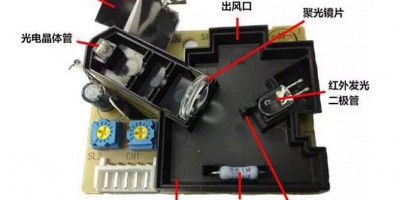
When it comes to air purifiers, from purchase to use, various online "guides" are everywhere, mostly repeating the same content—teaching users how to buy and how to use. But after "studying" for so long, do you really know how to use the air purifier in your home? Specifically, today we are focusing on a small component that is standard in most purifiers but ignored by 99% of users—the air quality sensor represented by the PM2.5 sensor. This article will explain in detail how this seemingly inconspicuous component works.
With the development of the IoT industry, the variety of smart home products is increasing. Whether it is a smart bracelet, smartwatch, fresh air system, or air purifier, these products are inseparable from sensors. Sensors are the cornerstone of the Internet of Things. Currently, common sensors in smart home products include motion sensors, smoke sensors, PM2.5 sensors, temperature sensors, fine dust sensors, and dust sensors. Below is a detailed introduction.
Air quality sensor is often used to monitor pollutants in the air and is an important part of air purifiers and fresh air systems. Although it is not known to average consumers, it is vital to the entire industry. Domestic sensor technology development has always lagged behind other countries, but with the development and innovation of technology and the unremitting efforts of many domestic related sensor companies, the application of air quality sensors has opened a new situation, which has far exceeded foreign technology levels. For example, Guangzhou Luftmy Technology, founded in 2012, focuses on the research and development, production and sales of particulate matter sensors (PM2.5 sensors).
