

Technical Support:
158-7527-1139

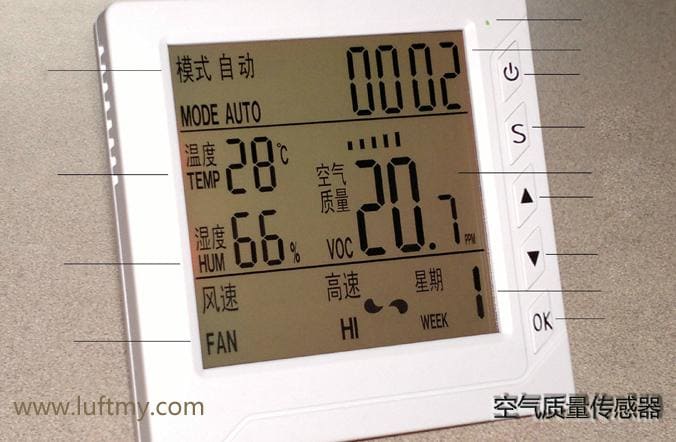
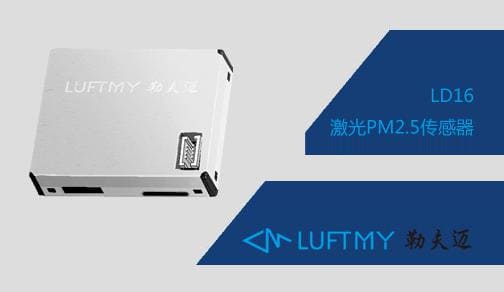
Air quality sensors are commonly used to monitor pollutants in the air and are an important component of air purifiers and fresh air systems. Although not well-known to average consumers, they are crucial to the entire industry. The development of domestic sensor technology has historically lagged behind other countries, but with technological innovation and the unremitting efforts of many domestic sensor companies, the application of air quality sensors has opened up a new situation, already far exceeding foreign technical levels. For example, Guangzhou Luftmy Technology, founded in 2012, focuses on the R&D, production, and sales of particulate matter sensors (PM2.5 sensors).
1. Air quality sensors used for particulate matter monitoring
①. Particulate Matter Sensors
The full-scale application of air purifiers in China began with the outbreak of haze, and PM2.5 sensors were the first to be recognized by the public. Early PM2.5 sensors were just simple infrared gas detectors with a level output, using red, yellow, and green indicator lights to show air conditions. National standards stipulate that when the PM2.5 concentration in the air is lower than 35μg/m3, it is classified as Excellent and displayed in green. However, some manufacturers cheated by changing the defined values—for example, setting the green light to display when PM2.5 was below 100μg/m3. Consumers seeing the light change from red to yellow to green would believe the particle concentration had dropped to a safe range, thus deceiving the consumer.
With the upgrade of domestic sensor technology, the analog qualitative output of sensors has been transformed into quantitative output, directly displaying PM2.5 concentrations. This digitized air quality, leaving companies with no opportunity to cheat and allowing consumers to understand air quality more intuitively, further promoting the healthy development of the purifier industry.
②. Application Development of Particulate Matter Sensors
As is well known, the smaller the particle size, the greater the harm the attached bacteria cause to the human body. PM2.5 can enter the bloodstream, and the harmful substances attached to it can cause cancer; although PM10 does not enter our alveoli directly like PM2.5, it can cause damage to our throat and airways; PM1.0 causes even greater damage.
Currently, many European and American countries pay more attention to PM10 pollution, while South Korea has included PM1.0, PM2.5, and PM10 monitoring in its national standards. China is also undergoing a consumption upgrade, promoting the in-depth development of the purifier industry by monitoring multiple concentration parameters such as PM1.0, PM2.5, and PM10. This places higher demands on air purifiers: first, the filters must not only remove PM2.5 but also handle smaller particles; second, sensors must not only perform multi-channel measurement but also achieve low noise, long life, and high reliability.
2. Continuous Attention on formaldehyde pollution
①. Formaldehyde sensors: The improvement of the atmospheric environment has affected the sales of purifiers intended solely for haze removal. Many purifier companies have begun to focus on formaldehyde treatment and monitoring data displays. Companies like A.O. Smith have launched formaldehyde digital display purifiers, which effectively solve a rigid consumer demand and have been warmly received by the market.
Formaldehyde sensors have long faced issues such as high prices, short lifespans, and susceptibility to interference, and the awareness of demand among air purification companies was not obvious, so they were not fully promoted.
②. Application trends of formaldehyde sensors
Formaldehyde sensors generally face difficulties such as short lifespans, high costs, high cross-gas interference, and difficulty in transport and storage. Currently, due to material limitations, the lifespan of most formaldehyde sensors is only about two years.
3. Invisible and Deadly CO2 Carbon Dioxide
CO₂ is widespread in indoor air but is often overlooked. Although it is colorless, odorless, and non-toxic, it can still harm people invisibly. When indoor CO₂ reaches 1000ppm, the human body will feel discomfort; at 2000ppm, it belongs to mild hypoxia, causing shortness of breath, headache, and dizziness. At 5000ppm, it is a health limit environment where human functions are severely disordered, leading to loss of consciousness and confusion. Therefore, the harm of CO₂ to the human body cannot be ignored.
4. Application Trends of Air Quality Sensors
While technology in industries such as household air purifiers, fresh air systems, and air conditioners continues to upgrade, domestic companies are also exploring more development paths to bring air quality monitoring technology to more life scenarios, such as gas monitoring in the automotive field. As a confined travel space, cars also face air pollution problems such as excessive particulate matter, formaldehyde, and CO₂, which threaten consumer health.
For sensor companies, more innovative technology development and research are needed, but the most important thing is to focus on the rigid needs of the market and customers. Guangzhou Luftmy focuses on the research and application of gas sensor technologies and algorithms. It holds a leading position in the industry across multiple performance indicators such as measurement accuracy, stability, consistency error, and anti-interference. For three consecutive years from 2015 to 2017, Luftmy's infrared/laser dust sensors, PM2.5 sensors, micro-dust sensors, particulate matter sensors, dust sensors, and air quality sensors have received widespread acclaim in the industry.
