Technical Support:
158-7527-1139

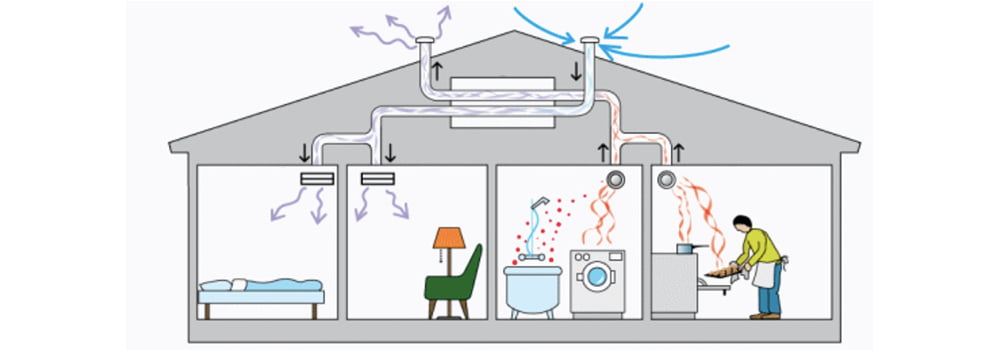
In today's pursuit of comfortable and healthy living environments, air conditioning systems have become an essential facility for many buildings. However, there are often misunderstandings regarding the different types and functions of these systems. In particular, many people are confused about the difference between a fresh air system and central air conditioning. So, what exactly is the difference? And how are they interrelated?
First, let us clarify the definitions. Central air conditioning refers to a centralized cooling system that cools or heats the air inside a building to control the indoor temperature. It achieves temperature regulation through components such as heat/cold sources, supply air ducts, and return air ducts. In contrast, a fresh air system is a system that introduces fresh outdoor air and exhausts stale indoor air to ensure air freshness and circulation.
Central air conditioning and fresh air systems have distinct differences in function and principle. Central AC primarily focuses on regulating indoor temperature to reach a comfortable level. On the other hand, the fresh air system emphasizes the improvement of indoor air quality by bringing in fresh air and effectively removing indoor pollutants and odors.
Despite these differences, they are often complementary in practical applications. In many buildings, the central air conditioning system is combined with a fresh air system to form a complete HVAC solution. This design not only regulates temperature but also ensures air circulation, significantly enhancing overall comfort.
In such an integrated system, central air conditioning manages the temperature, while the fresh air system exchanges indoor and outdoor air to eliminate pollutants, ensuring a boost in indoor air quality. This combination is vital for both human health and comfort.
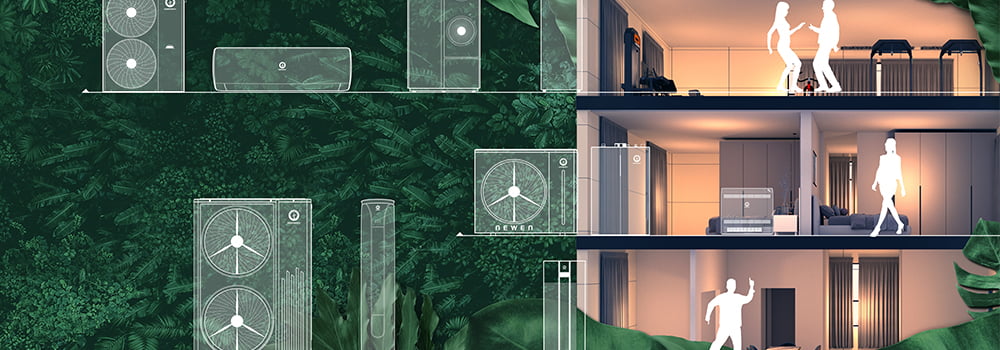
Beyond functional differences, fresh air systems and central air conditioning also differ in energy consumption. Generally, a fresh air system consumes less energy because it primarily focuses on air exchange without the high energy required for massive temperature shifts. Central air conditioning, however, consumes more energy, especially in extreme heat or cold, to maintain a stable indoor climate.
In summary, while they differ in principle and energy use, the fresh air system and central air conditioning are complementary. Together, they provide a comprehensive environment that ensures both comfort and indoor air quality.
Therefore, when discussing these systems, we should not view them as independent units but rather understand their synergy to better apply them in modern architectural HVAC design and operation.