

Technical Support:
158-7527-1139

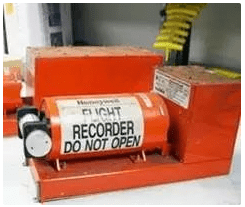
Test: Many recent accidents, whether aviation disasters or bus crashes, have brought the term “black box” into the public eye. So, what exactly is a “black box,” and why is it searched for after every accident?
A black box is commonly known as a flight recorder, which can be compared to the dash cams installed in cars; it is one of the specialized electronic recording devices for aircraft. The best explanation for a black box is a class of device installed on planes, ships, trains, and automobiles used to record the vehicle's operating status with high crash resistance. It can record multiple real-time operational data points and is not easily destroyed during an accident, making it vital for investigating and analyzing the cause and process of accidents.
The exterior of a black box is not actually dark black; on the contrary, it is a bright orange and often features reflective markings for night searches. Because the data stored in the recorder after an accident is crucial and mysterious, and because recorders in some accidents turned black after being burned by fire, people have grown accustomed to calling the flight recorder a “black box.”
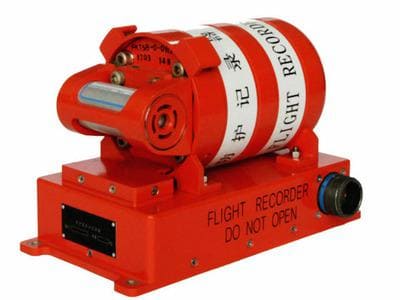
As an important transportation electronic device, the black box possesses strong protection capabilities against impacts, high temperatures, deep-sea water pressure, and corrosion, allowing it to preserve vital information in various accidents. Once powered on, the black box starts working automatically to record system operation, status information, operational data, and video information of the vehicle, independent of human control. The data in an aircraft black box is collected in real-time from aircraft sensors and related systems. Using sensors installed in the aircraft structure, data is gathered from components and systems to describe how they were configured and used before and during an accident. There are sensors to detect acceleration, airspeed, altitude, engine performance, cabin temperature and pressure, flap settings, and more. Data acquisition computers centralize and format data from these sensors, as well as onboard computers and other equipment.
With the continuous improvement of technology, the emergence of deployable black boxes has effectively solved the difficulties of locating and salvaging black boxes after an accident and improving their survival rate. This type of black box uses crash-sensing sensors to monitor abnormal changes in characteristic parameters during the moment of impact with the ground or sea, quickly triggering its separation from the fuselage—a principle similar to the deployment of airbags in a car during a collision.
